Your Search ROAS Might Be Lying to You
📊It’s giving you distorted data but you keep building on it, and more!

Hello! You've arrived at What Actually Works 🤓
We break down the real strategies, decisions, and plays that actually move the needle in your marketing, and here it for today.
🤥 Your Search ROAS Might Be Lying to You
Performance teams treat CTV as a brand play and search as a performance play. That clean separation feels logical. It’s also why your attribution model is giving you a distorted picture of what’s actually driving revenue.
Here’s what’s happening underneath the numbers.
The mechanism nobody is talking about
When a prospect sees your CTV ad, they don’t convert immediately. They close the app, go about their day, and three days later search for exactly what you sell. Your search campaign captures that click, closes the conversion, and takes full credit. Your CTV campaign shows zero attributed revenue and gets cut at the next planning cycle.
This is last-click attribution systematically starving your upper funnel. CTV primes brand recall, compresses the consideration window, and increases the probability a user chooses your result over a competitor’s when they hit the search bar. The search campaign didn’t earn that click alone.
It harvested intent that CTV created. EMARKETER’s Ad Measurement Trends H1 2026 puts a number on this shift: 27.4% of CTV ad buyers now rank conversion and sales impact as their primary KPI, overtaking brand lift for the first time. The market has figured out what the attribution model hasn’t caught up to yet.
What it looks like in practice
Jones Road Beauty added TV through Tatari. Within the first month, Meta efficiency improved as net-new audiences fed the algorithm with fresh signals, branded search climbed as TV drove top-of-funnel discovery, and in-store customers started citing TV as how they first found the brand.
TV now runs at 20 to 25% of Jones Road’s spend during peak. Not a test budget. A core growth channel.
Fabletics saw the same pattern. Once TV was in the mix, the point of diminishing returns on Facebook pushed out. Same spend, more room to scale. This is the halo quantified. Tatari measures it in real time alongside your digital channels so you can see exactly what TV is unlocking across your whole stack. You can schedule a demo here.
The minimum viable test
Run CTV in two markets, dark in two comparable markets, and hold search spend constant across all four. The delta in branded search volume and conversion rate between exposed and unexposed markets is your halo measurement.
Post-exposure window tracking within 72 hours is where log-level publisher data becomes non-negotiable.
The brands getting this right aren’t just adding a channel. They’re getting an accurate read on what’s actually driving revenue. Everyone still siloing CTV is optimizing a model that’s been broken from the start.
Partnership with Insense
You know UGC works for you. Now build the machine.
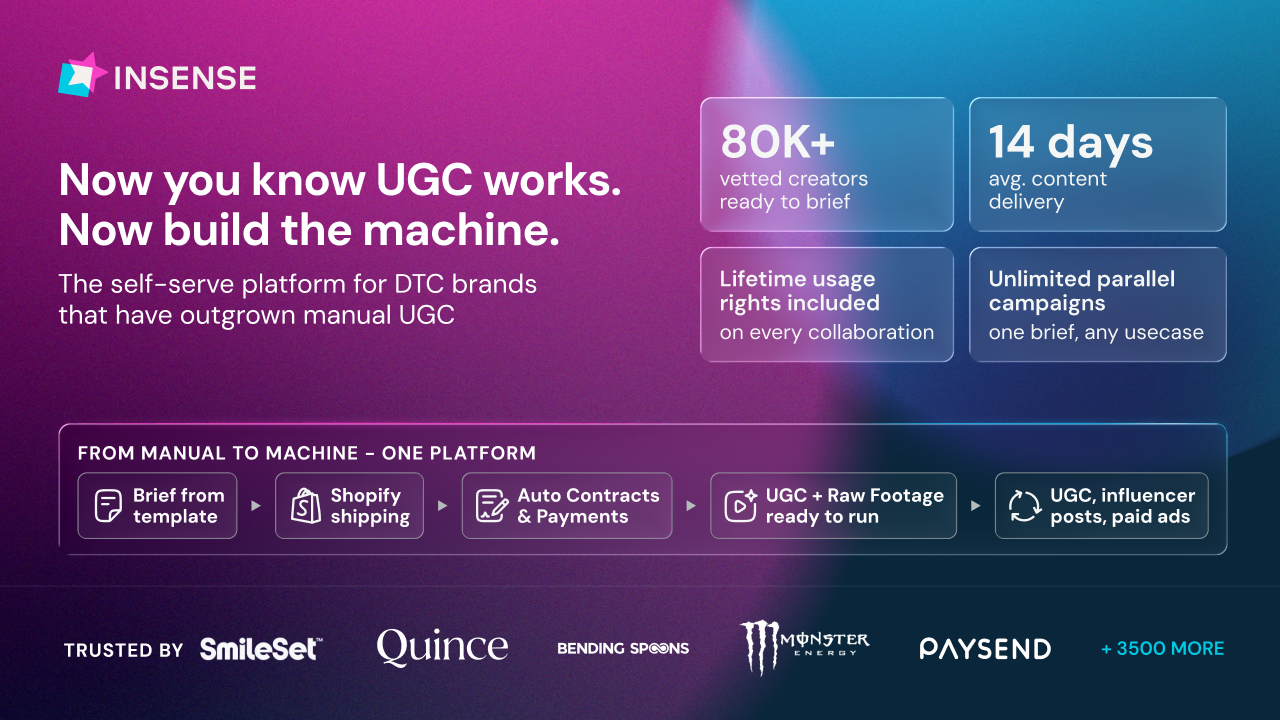
You know creator content works for your brand. The challenge now isn't whether to do it; it's how to do it at volume without the process falling apart.
Insense is the self-serve platform for brands that have outgrown manual UGC.
Source from 80,000+ vetted creators, run multiple campaigns in parallel, automate contracts and payments via Shopify integration, and receive content in 14 days, with full lifetime usage rights included.
Trusted by SmileSet, Paysend, Bending Spoons, Quince, Monster Energy, and 3,500+ brands using Insense to turn what works into a repeatable production system.
Book a free strategy call by April 24 and get a $200 platform credit towards your first campaign.
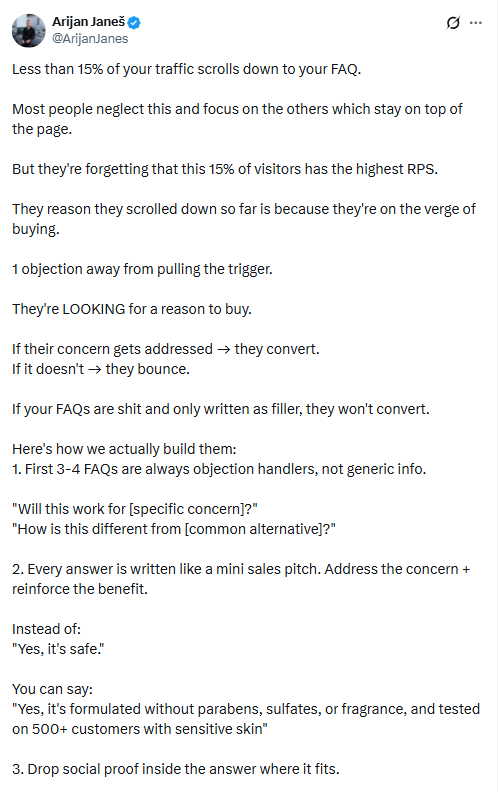
🐥 Tweet Worth Saving
Thanks for being part of the WAW team 💃 We’d love to know if this was helpful so we can continue playing it smart with the right strategies.