This Meta mistake is costing on TV
👀The same mistake media buyers stopped making on meta is still happening on tv, and more!

Hello! You've arrived at What Actually Works 🤓
We break down the real strategies, decisions, and plays that actually move the needle in your marketing, and here it for today.
👀 This Meta mistake is costing on tv
Most Meta buyers have learned a lesson that only comes after spending enough money to get burned by it.
A campaign isn’t the sum of its individual ads.
An ad that looks weak on its own may still be introducing new people into the funnel, influencing searches, or supporting conversions another campaign eventually captures. Judging it in isolation often leads to cutting something that was quietly making the rest of the account work.
That way of thinking is common on Meta.
It’s still surprisingly rare on TV.
The same principles apply. The metrics don’t.
The framework doesn’t change when you move from Meta to TV. Only the signals do.
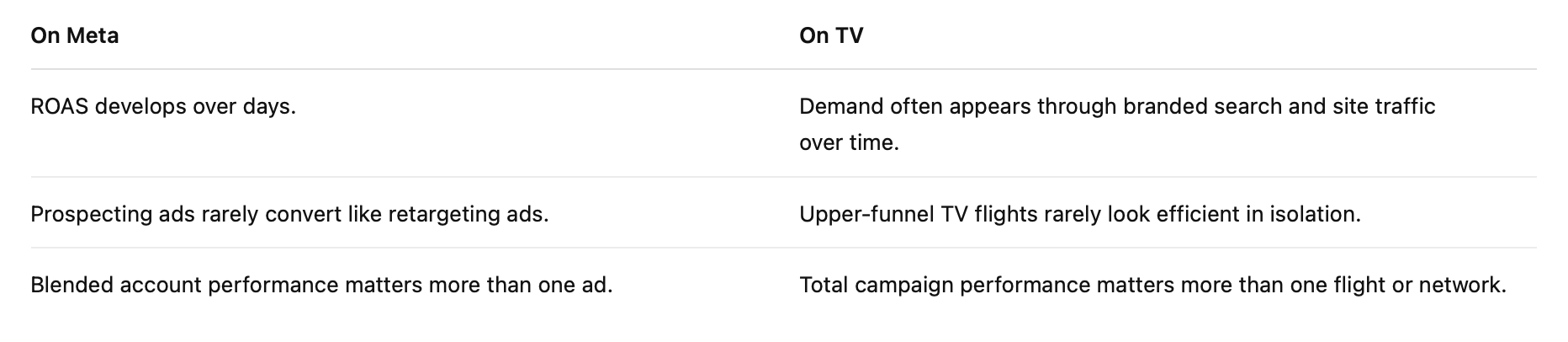
A TV flight sitting slightly below target isn’t automatically underperforming. It may be creating demand that’s showing up somewhere else in the media mix.
Apply the same questions you already use on Meta
Before cutting a TV flight, ask:
- Is this placement introducing new households or repeatedly reaching the same audience?
- Is it carrying a meaningful share of the overall media budget?
- Has branded search or direct traffic changed since it launched?
- What happens to total campaign performance if this flight disappears?
Those questions are routine in paid social.
They’re just as important in television.
Don’t confuse contribution with attribution
One of the biggest differences between experienced and inexperienced media buyers is understanding that not every dollar proves its value in the same report.
A prospecting Meta campaign often looks weaker than a branded search campaign.
That doesn’t make it less valuable.
The same applies to TV.
Some flights are designed to create demand, not collect the last measurable click. Judging them only by their standalone attribution number risks removing the activity that’s feeding the rest of the system.
Judge the portfolio, not the placement
That only works if flight-level, network-level and overall campaign performance can be viewed together instead of across disconnected reports.
That’s why Tatari brings linear TV, streaming and publisher buys into one platform, making it possible to evaluate each flight in the context of the entire campaign instead of as isolated line items. PATTERN Beauty used this approach from day one, measuring performance across phased TV investment and ultimately seeing a 3× revenue lift by month three.
You can see how the same measurement approach can be applied to your next campaign. Experienced media buyers don’t optimize one Meta ad in isolation. TV deserves the same discipline.
Partnership with Omnisend
How healthy is your email setup, really?

You probably know your open rate. What is harder to see is where your email setup is quietly losing revenue and what deserves attention first.
Connect Omnisend to ChatGPT or Claude and ask it to review your live account. In under 30 seconds, get a complete health score out of 100 with the highest-impact improvements ranked for you.
The audit shows what needs fixing first. Then ask ChatGPT or Claude to make the changes. It can build a segment or prepare a re-engagement campaign without leaving the chat.
Review the work and request changes naturally. Nothing goes live until you approve it.
You don't even need to write your own prompts. Omnisend built a full library, sorted from beginner to advanced.
Brands using Omnisend generate an average of $79 for every $1 spent. New customers can migrate for free within five days and pay up to 35% less than Klaviyo.
See what your account needs before your next campaign goes live.
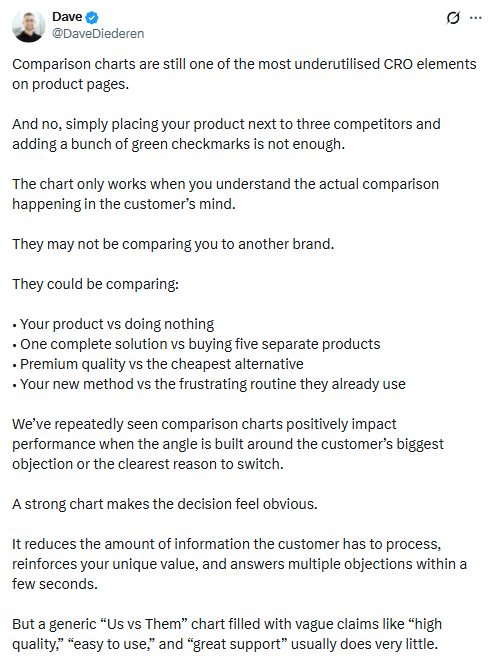
🐥 Tweet Worth Saving
Thanks for being part of the WAW team 💃 We’d love to know if this was helpful so we can continue playing it smart with the right strategies.