This decides if you compound
💪Three rules that separate accounts that compound from accounts that plateau, and more!

Hello! You've arrived at What Actually Works 🤓
We break down the real strategies, decisions, and plays that actually move the needle in your marketing, and here it for today.
💪Three Rules That Separate Accounts That Compound From Accounts That Plateau
Creative fatigue doesn’t always come from the audience.
Sometimes it comes from the process.
Many teams treat every creative brief as a fresh start. New hooks, new angles, new concepts. The focus stays on finding the next winner instead of understanding the last one. Over time, that creates a cycle where great creatives appear occasionally but almost never become repeatable.
The accounts that keep improving follow a different operating system.
Rule 1: Spend 70% of your effort expanding winners
The strongest creative teams don’t divide their roadmap evenly between iteration and exploration.
They protect the majority of it.
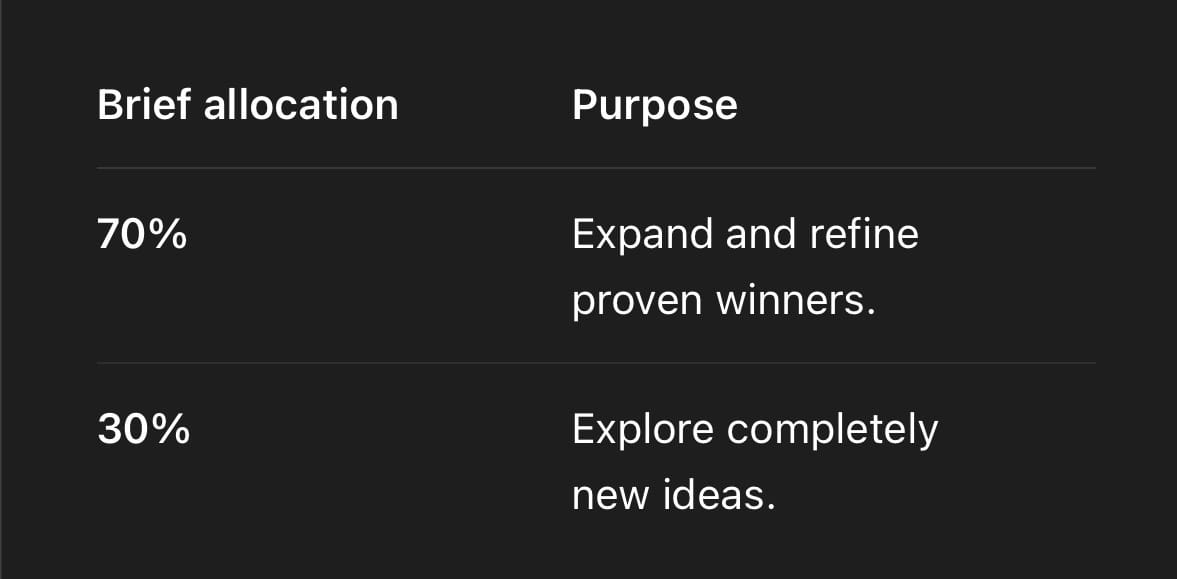
Every winning creative contains more value than a single ad. Walking away after one success means abandoning all the learnings still hidden inside it.
Rule 2: Every winner deserves a hypothesis before a sequel
A creative rarely wins for one reason.
Performance is usually a combination of:
- The hook.
- The angle.
- The format.
- The visual execution.
Before writing another brief, document what you believe caused the result.
The hypothesis doesn’t need to be right.
It needs to be specific enough that the next test can prove or disprove it.
Without that step, the next iteration becomes another guess instead of an experiment.
Rule 3: Change one variable. Protect the rest.
The fastest way to lose a learning is to change everything at once.
Instead, isolate the variable you’re trying to understand.
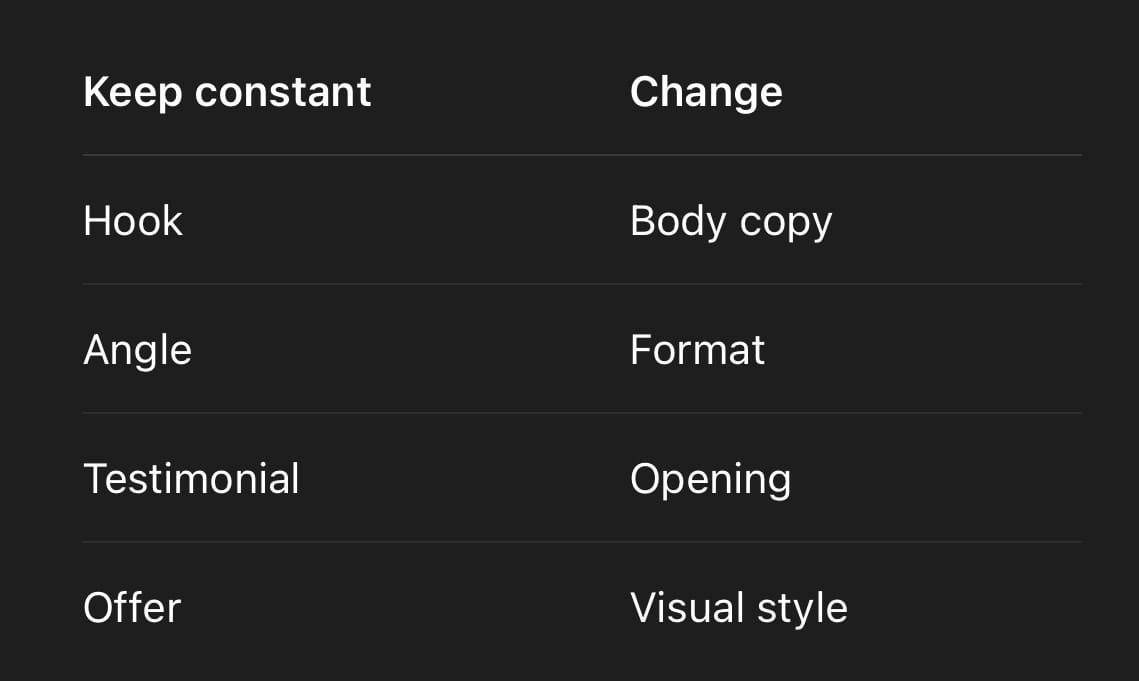
When multiple variables change together, a result explains nothing.
When one variable changes, every outcome teaches you something you can use again.
The compound effect isn’t the ad. It’s the process.
This approach rarely transforms performance overnight.
It compounds because every brief starts with more knowledge than the one before it. After two or three months, creative reviews stop revolving around opinions and start revolving around evidence collected from previous iterations.
Before your next briefing session, audit your last three winning creatives.
How many meaningful variations were built from each before the team moved on?
If the answer is zero or one, the plateau probably isn’t a creative problem. It’s an iteration problem.
Partnership with Omnisend
Everyone’s talking about AI. Here’s how three email marketing experts are actually using it.
You can read a hundred takes on AI and still have no idea what anyone actually types into it. So, we asked three experts to show us.
Jimmy Kim, founder of eCom Email Marketer, Chase Dimond, co-founder of eCom Email Marketer, and Bernard Meyer, AI Operations Manager at Omnisend, walk through how they use AI in their day-to-day work.
From pulling reports and analyzing campaign performance to spotting missed opportunities, they share the prompts and workflows that actually work. They also explain where AI still falls short and where human experience and judgment still matter most.
The session was recorded in ChatGPT, but Omnisend works with Claude too, so the same workflows carry over.
New to Omnisend? It’s an email and SMS marketing platform used by more than 150,000 ecommerce brands, generating an average of $79 for every $1 spent.
Migration is free, takes up to five business days, and plans cost up to 35% less than Klaviyo’s.
Watch the full 56-minute session, no signup required.
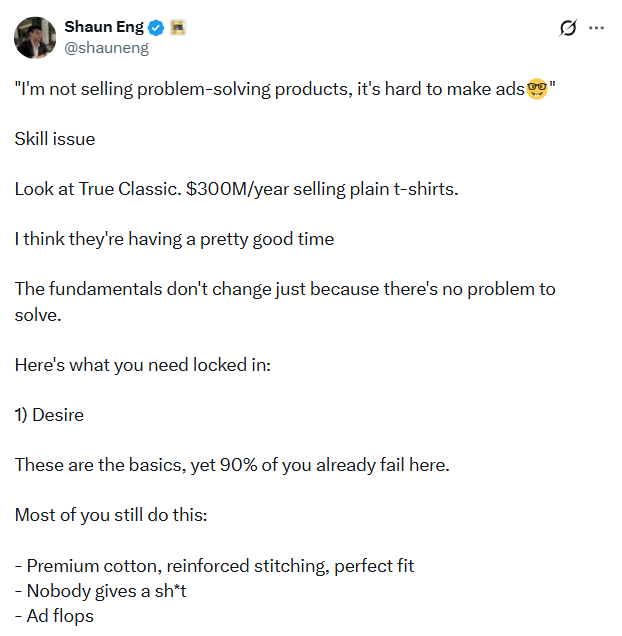
🐥 Tweet Worth Saving
Thanks for being part of the WAW team 💃 We’d love to know if this was helpful so we can continue playing it smart with the right strategies.