Solving the MER problem
🥲 Your MER looks great. That's the problem, and more!

Hello! You've arrived at What Actually Works 🤓
We break down the real strategies, decisions, and plays that actually move the needle in your marketing, and here it for today.
Your MER looks great. That's the problem.
Blended MER ( for anyone that’s new Marketing Efficiency Ratio ) is total revenue divided by total ad spend. It is the number most teams use to decide whether to scale.
It is also counting revenue that had nothing to do with your paid spend: returning customers, branded search, organic referrals, direct visits, word of mouth, PR. Every dollar of that revenue gets credited against ad spend and makes the metric look stronger than paid is actually performing.
The number that decides whether scaling makes money is incremental MER. Most teams have never calculated it.
The math most scaling decisions are missing:
Pull total revenue for the last 90 days. Subtract revenue from returning customers, direct traffic, branded search, and organic referrals. Each of those was going to happen without paid spend. What remains is the new-customer revenue paid has a reasonable claim to.
Divide that by ad spend.
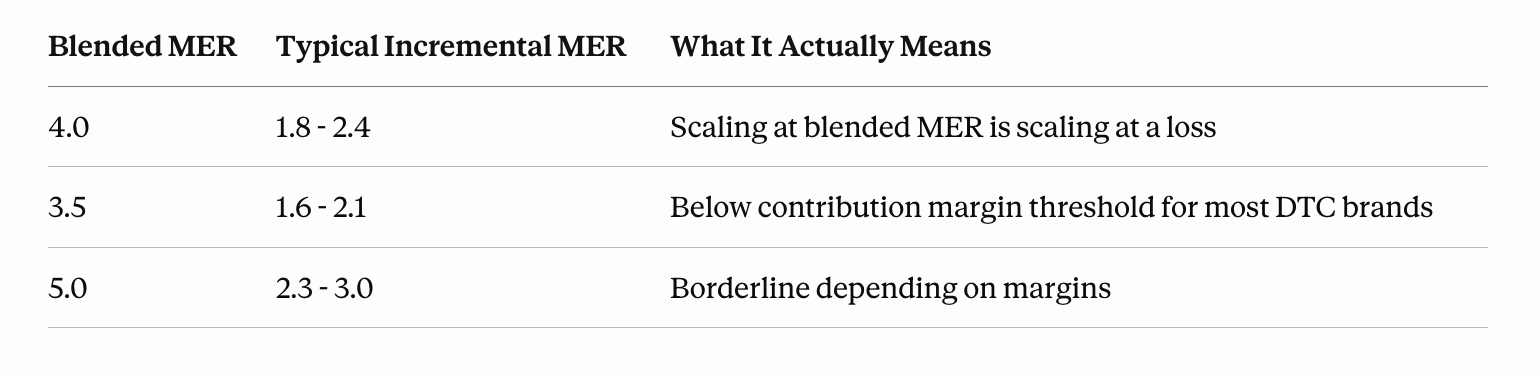
For most brands, incremental MER lands at 40-60% of reported blended MER. A blended MER of 4.0 is often an incremental MER of 2.0, which sits at or below the actual scaling threshold for a DTC business running normal margins.
The rule that changes the scaling decision:
If your contribution margin after shipping and COGS is 35%, you need incremental MER above roughly 2.85 to make money on the marginal dollar of spend. Below that, every additional dollar spent loses money regardless of what blended MER is showing on the dashboard.
Scale on incremental MER above your contribution margin threshold. Not on blended MER above a round number someone decided felt right.
The gap between the two numbers is its own diagnostic.
A small gap means paid is doing most of the work and the business is genuinely paid-dependent. A large gap means owned channels are carrying significant weight, which is good for resilience but means paid has less leverage than reported.
A gap that is growing over time is the warning signal nobody sees coming: paid is becoming less productive while owned channels absorb more of the revenue base. The blended number hides this trend completely. The gap reveals it every quarter.
The blended number is the dashboard. The incremental number is the truth.
Partnership with Modash
Your influencer picks are costing you launches.
Not the content. Not the brief. The roster.
You can nail the strategy, brief the creators perfectly, and still watch a launch flatline. Because the problem isn't execution. It's that the wrong people are on your roster, and you won't know it until the numbers come back empty.
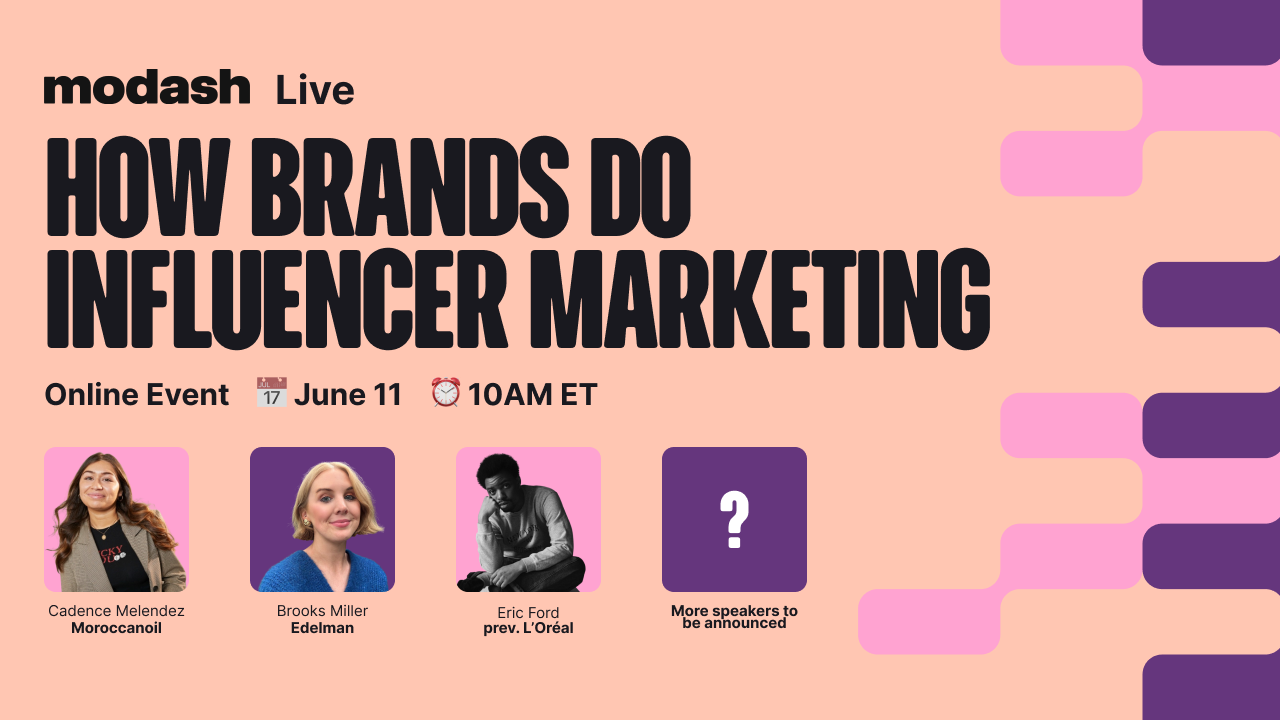
Today, Modash is running a free 3-hour session with the brand-side teams who've cracked this.
Cadence Melendez, Influencer Marketing at Moroccanoil, Brooks Miller, EVP of Creator Marketing at Edelman, and Eric Ford, formerly Global Communications at L'Oréal, are sharing exactly how they build rosters that move product, not just impressions.
→ The selection signals Edelman uses to separate creators who shift perception from those who just rack up views
→ Why your highest-reach creators are often your lowest-trust ones, and how L'Oréal's team handles that tradeoff
→ How Moroccanoil evaluates creator-brand fit beyond niche and audience size, and why most teams skip it
You'll leave knowing exactly which creators don't belong on your list, and what to do about it before it costs you.
Can't make it live? Register anyway and get the recording in your inbox within 24 hours.
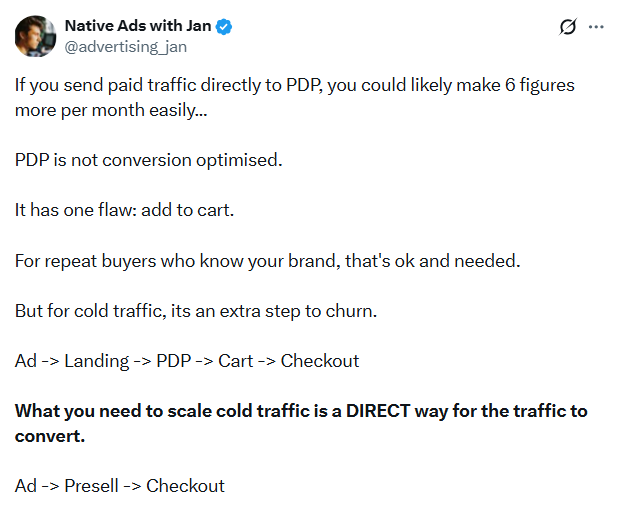
🐥 Tweet Worth Saving
🥳Events
🔥 The AI System Chime Built That Runs Their Entire Search Workflow Without a Single Daily Prompt
Today | Virtual Event | Free
Most marketing teams are still manually running every AI task they have. Bridget Nelson built something different at Chime, and it runs without daily input. Today, she's on stage with Tyler Roehmholdt from Bitly, showing exactly what that system looks like inside a real org.
✅ Reserve Your Free Spot
Can't make it live? Register anyway, you'll get the recordings within 24hours.
🔥 How the Creator Marketing Lead at Edelman Predicts Whether a Creator Will Drive Sales or Just Impressions
Today | Virtual Event | Free
Most brands only find out a creator was wrong for them after the budget is spent. Brooks Miller, EVP of Creator Marketing at Edelman, and Eric Ford, formerly Global Communications at L'Oréal, share the exact framework brand-side teams use to call that before the contract is signed.
✅ Reserve Your Free Spot
Can't make it live? Register anyway, you'll get the recordings within 24hours.
Thanks for being part of the WAW team 💃 We’d love to know if this was helpful so we can continue playing it smart with the right strategies.