Name the outcome not just the offer
“Get Coupons” feels neutral. It’s also quietly draining intent at the point of action, and more!

Hello! You've arrived at What Actually Works 🤓
We break down the real strategies, decisions, and plays that actually move the needle in your marketing, and here it for today.
🤩 Name the outcome not just the offer
“Get Coupons” feels neutral. It’s also quietly draining intent at the point of action.
We’ve seen accounts where traffic was strong, the discount was competitive, and the pop-up design looked clean, yet opt-ins lagged.
We swapped the button from “Get Coupons” to “Unlock My $20 Savings” and saw a 12 to 18 percent lift in email capture across mobile sessions. Same offer. Same layout. The only change was what the click promised.
The failure mode is subtle: the CTA describes your internal mechanism, not the user’s reward.
Nobody arrives wanting a coupon. They want a better price, a smarter purchase, or access others don’t have. When the button highlights the vehicle instead of the outcome, it creates friction at a micro level. And micro-friction compounds.
This is a language-to-intent mismatch.
The Benefit Translation Framework
Before finalizing a CTA, pressure test it with one constraint:
If the user clicks, what tangible result do they believe they are getting?
Then rewrite accordingly.
- “Get Coupons” becomes “Unlock My Savings.”
- “Sign Up” becomes “Get Insider Pricing.”
- “Submit” becomes “Reveal My Offer.”
You’re translating the process into payoff. That small shift matters because outcome-based language activates anticipation, while tool-based language activates compliance. Anticipation converts better.
There is a real tradeoff here. If you inflate the promise, short-term opt-ins may rise while downstream revenue per subscriber falls.
I’ve watched teams celebrate a 20 percent lift in capture, only to discover that the purchase rate dropped because the post-click experience felt underwhelming. Alignment between promise and delivery is non-negotiable.
Why this works comes down to cognitive compression. A strong CTA collapses the journey into a desirable end state. A weak CTA highlights the step required to get there. Steps feel like work. Outcomes feel like progress.
If you want to validate this beyond creative instinct, upload your test data into Thesys Agent Builder and ask, “Compare opt-in rate and revenue per subscriber by CTA framing.”
The charts will show whether the lift sustains through purchase or dies after capture. That clarity prevents you from optimizing vanity metrics. Save $10 with Free Credits
Your CTA is not a button label. It’s the final psychological lever before commitment.
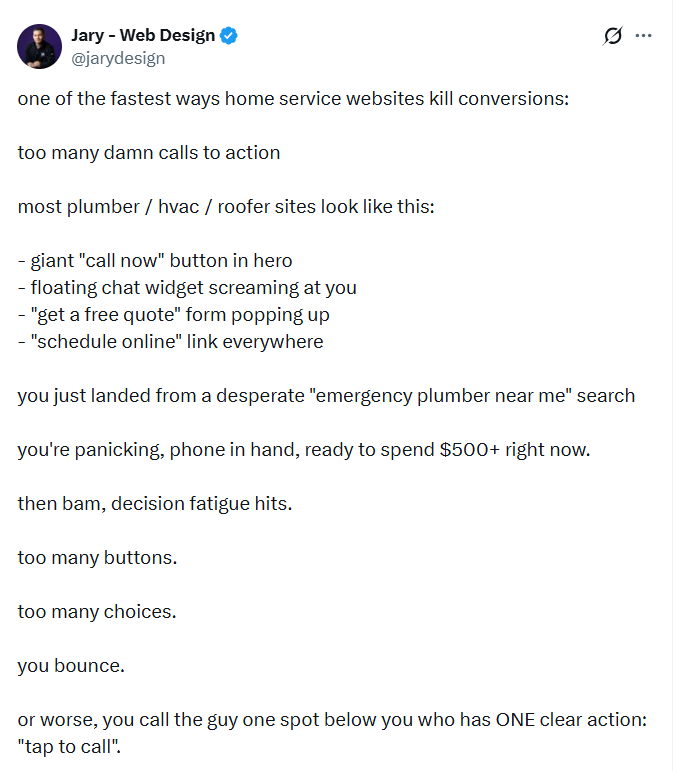
🐥 Tweet Worth Saving
Thanks for being part of the WAW team 💃 We’d love to know if this was helpful so we can continue playing it smart with the right strategies.