Careful what you offer
🧐The favor framing works. whether it's profitable depends on math nobody runs, and more!

Hello! You've arrived at What Actually Works 🤓
We break down the real strategies, decisions, and plays that actually move the needle in your marketing, and here it for today.
🧐The Favor Framing Works. Whether It's Profitable Depends on Math Nobody Runs.
Reframing a price increase as a favor, lock in the old rate for three orders, converts better than a flat notice. That part's well established. What doesn't get checked: whether pulling those three orders forward at the old price actually makes money compared to what happens without the offer.
Two things happen when a customer locks in:
- Revenue that would have arrived later, at the new higher price, arrives now, at the old lower price
- Revenue that might never have arrived at all, because the customer would have churned before their next order, gets captured instead
The offer is a good trade when the second effect dominates, meaning it's mostly pulling in revenue that was genuinely at risk. It's a bad trade when the first effect dominates, meaning it's mostly just moving already-guaranteed revenue to a lower price point for no real gain.
The variable that decides which one you're looking at: baseline reorder probability without the offer.
- High-retention segments (customers already ordering reliably) barely need the incentive, so the offer mostly just discounts revenue that was coming anyway
- At-risk segments (declining order frequency, approaching typical churn window) are exactly where the pulled-forward revenue is genuinely incremental
Running the same flat offer to the whole list averages these two effects together and usually loses margin on the reliable segment to gain volume on the at-risk one.
Segmenting the offer, full price-lock for at-risk customers, a smaller or no incentive for the reliably retained, keeps the mechanism's psychological benefit while protecting margin on the customers who were never going to leave anyway.
Before the next price change, pull reorder probability by segment first. The favor framing is the easy part. Knowing who actually needs the favor is where the money is.
Partnership with Billo
Half of the top UGC ads share 3 hook types. Most marketers skip all of them.
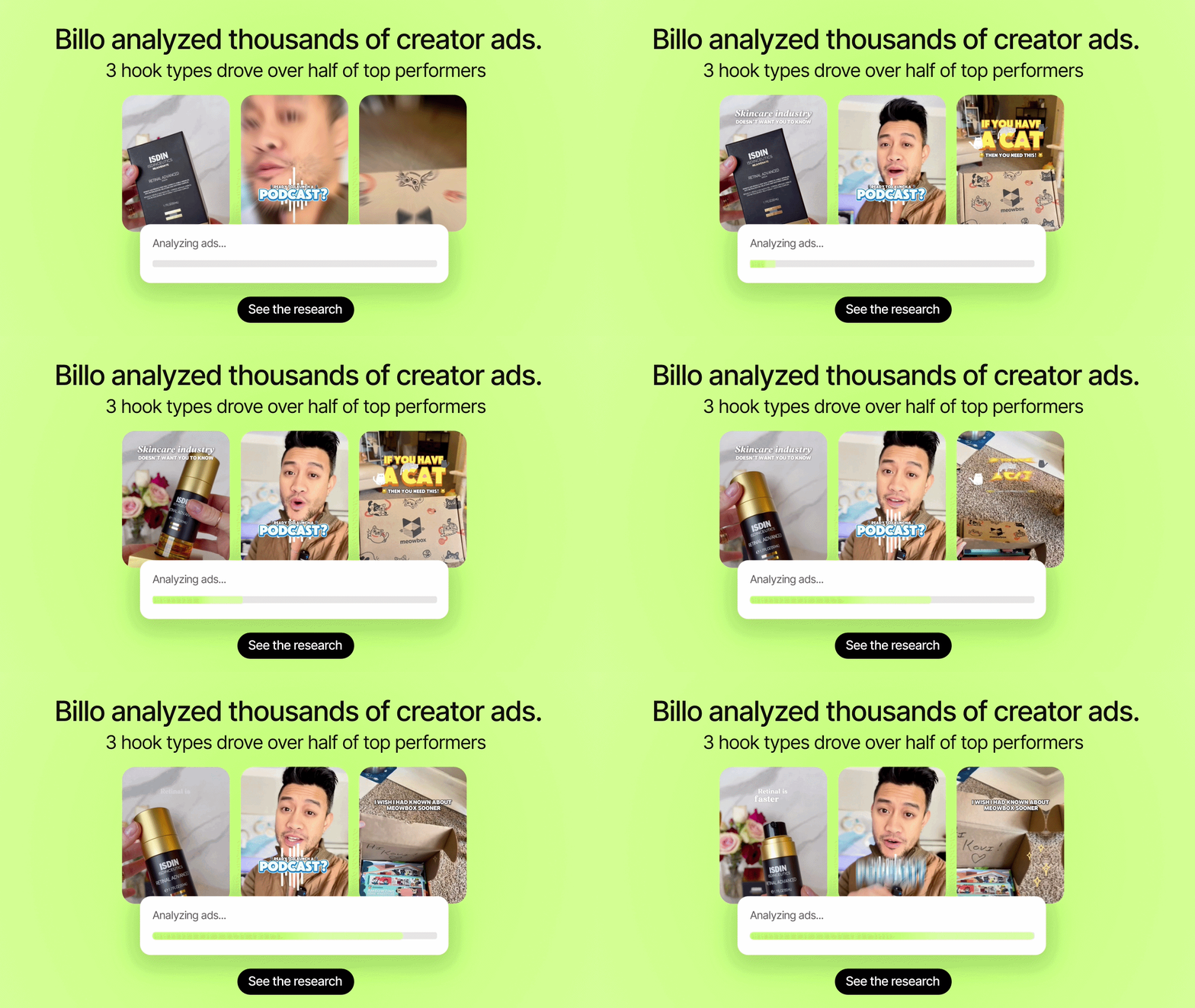
Billo analyzed every top-performing creator ad on the platform and tagged each one by hook type. The hooks most marketers default to - list formats, FOMO framing, comparison setups, and insider angles barely showed up at the top.
The three that won are in the full breakdown, with the exact lines those ads opened with.
Read it before your next round of creator ads.
🐥 Tweet Worth Saving
Thanks for being part of the WAW team 💃 We’d love to know if this was helpful so we can continue playing it smart with the right strategies.