Your PPC setup is the problem
🥲 The SPAG fix most sellers resist, and more!

Hello! You've arrived at What Actually Works 🤓
We break down the real strategies, decisions, and plays that actually move the needle in your marketing, and here it for today.
🥲Why Your PPC Structure Is the Actual Problem (And the SPAG Fix Most Sellers Resist)
Most Amazon advertising problems are not bid problems. They are architecture problems. Forty keywords in one ad group means the algorithm allocates spend on its terms, not yours. High-volume broad terms eat budget from proven converters. Your best keywords subsidize your worst ones and you have no lever to fix it.
SPAGs, single product ad groups, one product and one match type per ad group, solve this. More setup, cleaner control.
The Four-Step Build
- Start with auto campaigns as a discovery layer. Run broad auto campaigns on new ASINs for three to four weeks. The goal is not sales. It is signal: which terms convert, what your buyer's language looks like, which competitor ASINs your traffic overlaps with.
- Harvest exact match converters. Any term converting at or below your target ACoS gets pulled into its own SPAG as an exact match. Its own budget. Its own bid. Its own data. Scale it without touching anything else. Kill it without disrupting adjacent campaigns.
- Negative keyword sculpting as ongoing hygiene. Add harvested exact match terms as negatives in the broad and phrase campaigns they came from. If you skip this, the same term triggers ads across multiple campaigns simultaneously and you bid against yourself. Most sellers have no idea this is happening.
- Use placement bid modifiers based on actual data. Top of search, rest of search, and product detail pages convert at different rates for every product. Pull AMC audience data to identify where your new-to-brand customers actually convert, then set multipliers against that, not against category benchmarks.
The Metric That Closes the Loop
Stop optimising individual campaign ACoS. Track TACoS across the full account. New ASINs should see TACoS compress over six to twelve months as organic rank builds from PPC-generated velocity. If TACoS plateaus at month eight, the problem is not bids. It is listing quality, review velocity, or external traffic signals, and no bid optimisation fixes that.
That last point is where Stack Influence fits. Your SPAG structure controls how spend flows inside Amazon. Stack Influence controls what organic signals feed into it from outside.
Their AI matches your product to micro-influencers from a network of 11M+ creators, you pay with product, and every purchase routes real sales velocity into your listing. Brands like Martha Stewart and Unilever have used it to reach page one positioning in two months. Sign up this week and save 10% on your first campaign.
Partnership with Pounce
Most AI is wrong 1 in 4 times. Pounce is wrong 1 in 50.
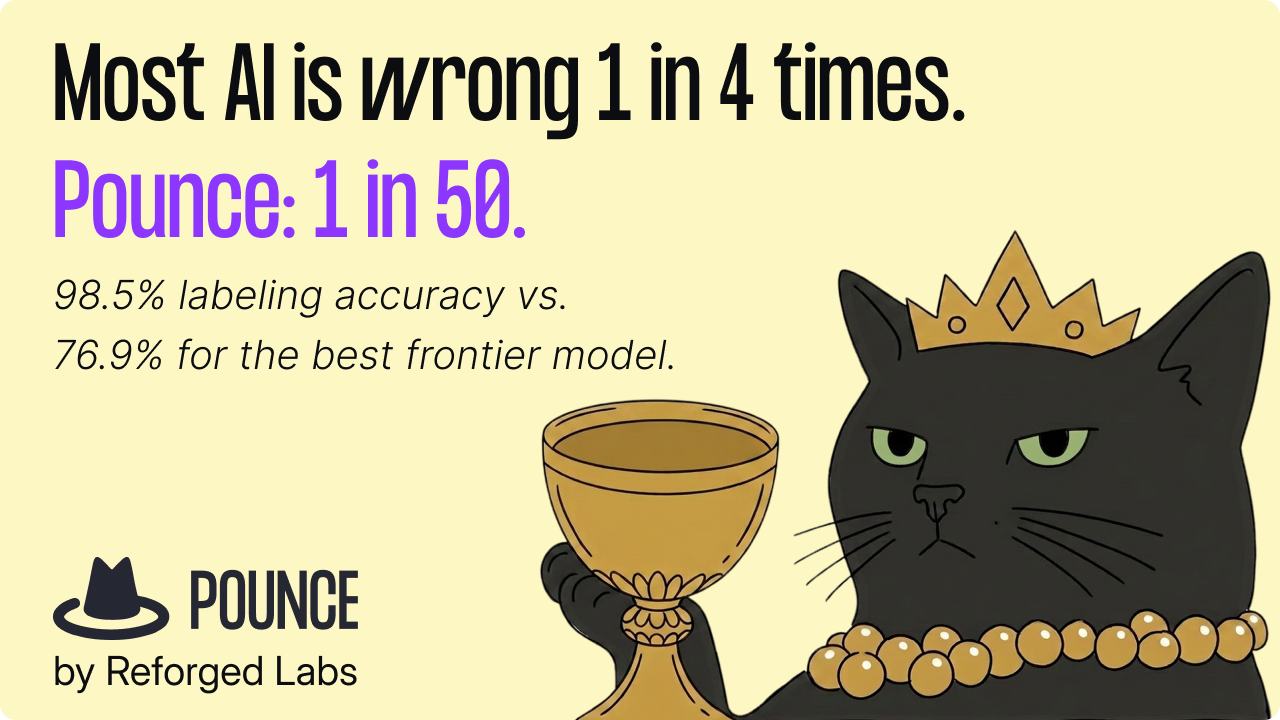
Creative analytics tools that run on off-the-shelf AI mis-tag your ads nearly a quarter of the time. Every bad tag is a false pattern, a misleading insight, a wasted brief. Your whole performance function ends up working off bad data.
Pounce fixes it at the source with real human judgment baked into every label. 98.5% accuracy on the April 2026 Mobile Gaming Video Ads Understanding Benchmark, versus 76.9% for the best frontier model.
And accurate data is just the start. Pounce runs your creative strategy, brief generation, competitor intelligence, and performance optimization autonomously, without adding headcount.
The same intelligence behind Supercell, Wildlife Studios, and DeNA. Now available to any brand that runs ads.
Get started for free with Pounce today.
🐥 Tweet Worth Saving
Thanks for being part of the WAW team 💃 We’d love to know if this was helpful so we can continue playing it smart with the right strategies.