Your Best Creator Never Had Chance
👎 Campaign structure buried them before learning started, and more!

Hello! You've arrived at What Actually Works 🤓
We break down the real strategies, decisions, and plays that actually move the needle in your marketing, and here it for today.
👎Your Best Creator Never Had Chance
Most accounts that say partnership ads underperform have not tested partnership ads. They have tested a version of the structure that guarantees the outcome they got. Understanding the difference starts with seeing both versions side by side.
The wrong structure: one ad set with all creators grouped inside it. Meta receives one collective signal, distributes spend based on early momentum, and the creator who gets the first conversion gets most of the budget.
The rest receive token delivery, produce no meaningful data, and get cut. The account concludes that most creators did not perform. The structure did not give most creators a chance to perform.
The right structure: one CBO campaign on maximum conversions with one dedicated ad set per creator. Ten creators means ten ad sets. Every ad a creator makes lives exclusively inside their own ad set.
Meta builds a distinct signal for each one independently. Each creator gets a fair delivery window before the algorithm makes distribution decisions. You learn what each creator is actually capable of rather than what one creator does when handed the full budget.
Within each ad set: target broad, adjust age and gender only where the creative clearly calls for it, turn off heavy creative enhancements, enable official and dynamic identity, match the ad schedule to the creator's usage rights window, and pull existing posts if the creator has already published organically.
Each of these is a signal decision, not an aesthetic one. Getting any of them wrong changes what the algorithm learns and how the data comes back.
The exception to CBO is ambassador drops and collabs where 30 to 50 ads run around a single event. Those warrant their own ABO campaign with spend controlled per moment rather than per creator, because the demand you are trying to capture is event-specific, not audience-specific.
Before your next partnership ad build, audit the current structure against one question: does every creator have their own ad set, or are multiple creators sharing one?
If they are sharing, the data you have been reading does not tell you what those creators can do. Separate them, run the correct spend floor for each, and read the results after a genuine test window. The underperformance conclusion usually changes
Partnership with AirOps
Why your best pages get skipped in AI answers
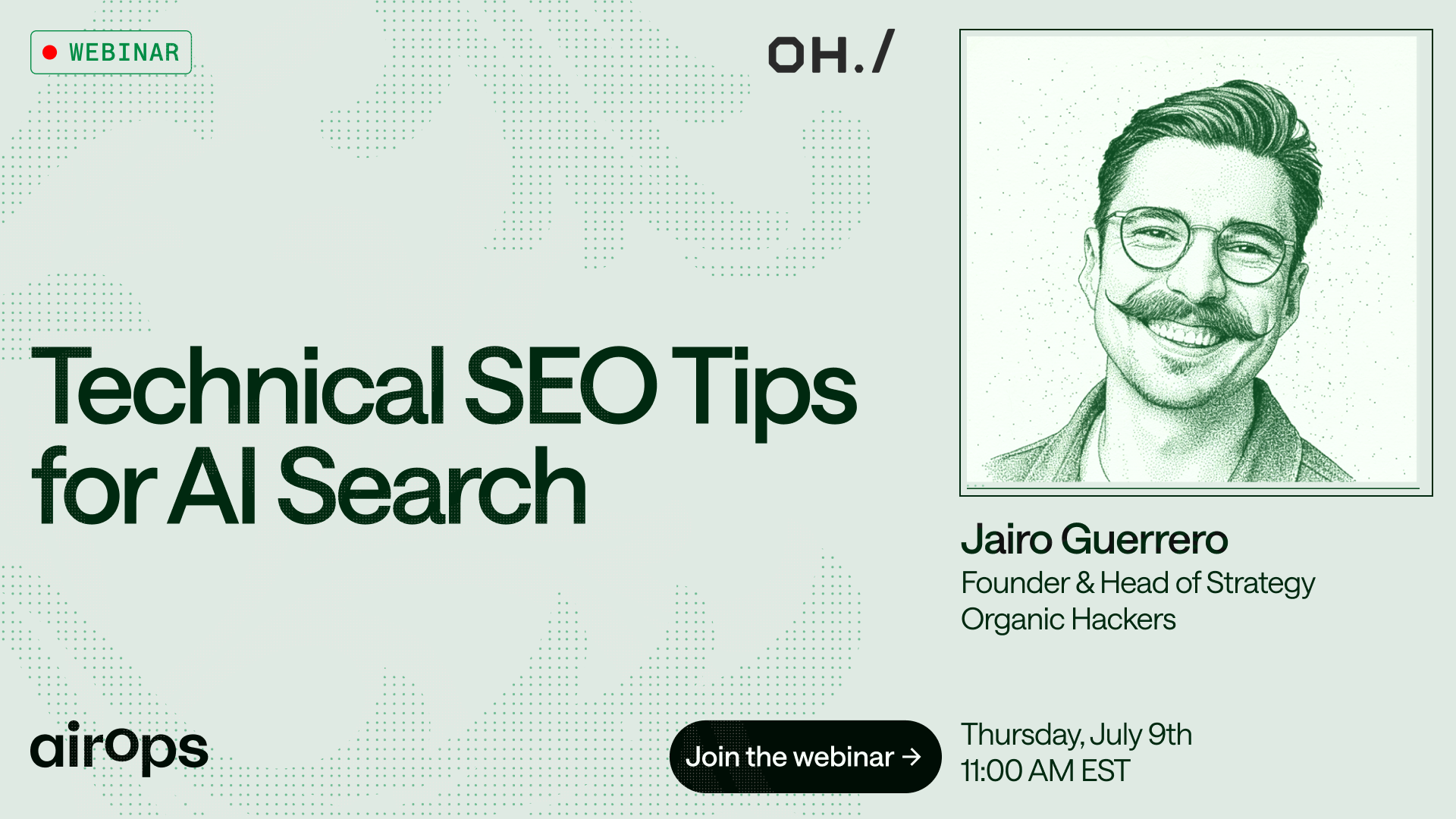
Ranking at the top of Google no longer guarantees you show up in ChatGPT, Perplexity, or AI Overviews. AI search discovers, renders, and cites pages on a different system than traditional SEO, and strong pages are getting left out without a clear signal as to why.
On July 9 at 11am ET, Jairo Guerrero, Founder of Organic Hackers, breaks down exactly where pages fall out of that pipeline. He's spent years inside server logs watching how AI crawlers actually behave, work most SEO tools can't even see.
You'll walk away knowing:
- The first 3 technical checks to run when pages go missing from AI answers
- What server logs reveal about crawler activity that every other tool misses
- Which structured data and template fixes make pages easier to cite
- Exactly where your pages are breaking in the crawl-to-citation pipeline
This is the session that turns "why aren't we showing up" into a checklist you run the same week.
Can't make it live? Register anyway and get the recording in your inbox within 24 hours.
🐥 Tweet Worth Saving
Thanks for being part of the WAW team 💃 We’d love to know if this was helpful so we can continue playing it smart with the right strategies.