Why AI Skips Certain Pages
🧐Simple structural issues often reduce citation chances, and more!

Hello! You've arrived at What Actually Works 🤓
We break down the real strategies, decisions, and plays that actually move the needle in your marketing, and here it for today.
🧐Why AI Skips Certain Pages
These 3 questions give you the answers
Does your most important claim appear in the first 100 words?
AI retrieval systems weight early content heavily. The way a page is processed for AI answers means a specific, extractable assertion in the opening section is more likely to be surfaced than the same claim buried in paragraph six.
Run your top ten pages and find the first sentence that makes a clear, specific claim. If it appears after the third paragraph, that page has a citation eligibility problem regardless of how thorough the content that follows it is. The fix is restructuring, not rewriting, move the core claim up, not out.
Do your H1s and H2s mirror the exact language of your target queries?
Pages where heading structure directly reflects the language of target queries cite at 41% versus 29% for pages without that match. The heading serves two audiences: the human reader and the retrieval system scanning the document for relevance signals. Most content is written for the first audience and ignores the second entirely.
Auditing your heading language against your actual target query set is a one-hour task that produces an immediate priority list. The pages where heading and query language diverge significantly are the pages losing citation probability they should be winning.
Is the page trying to answer one question or cover an entire topic?
Focused pages covering a single specific question consistently outperform comprehensive guides in AI citation. A tightly scoped page makes it easy for AI systems to pull a clean, attributable answer.
A page attempting to cover every angle of a category requires the system to make interpretive choices about which section is most relevant, and those choices often resolve in favour of a competitor's narrower, cleaner page. The content refresh priority is not your thinnest pages, it is your most sprawling ones.
On July 9, Jairo Guerrero, Founder of Organic Hackers, is joining AirOps to cover exactly this: the structured data fixes, template changes, and technical checks that determine whether a page makes it through the crawl-to-citation pipeline. You can secure your free spot here.
Content freshness matters alongside structure: pages updated in the 30 to 90 day window cite more frequently than either very recent rewrites or older static content. The audit and the cadence belong together.
Partnership with Alison
Your creative cleared every internal check and failed every platform one.
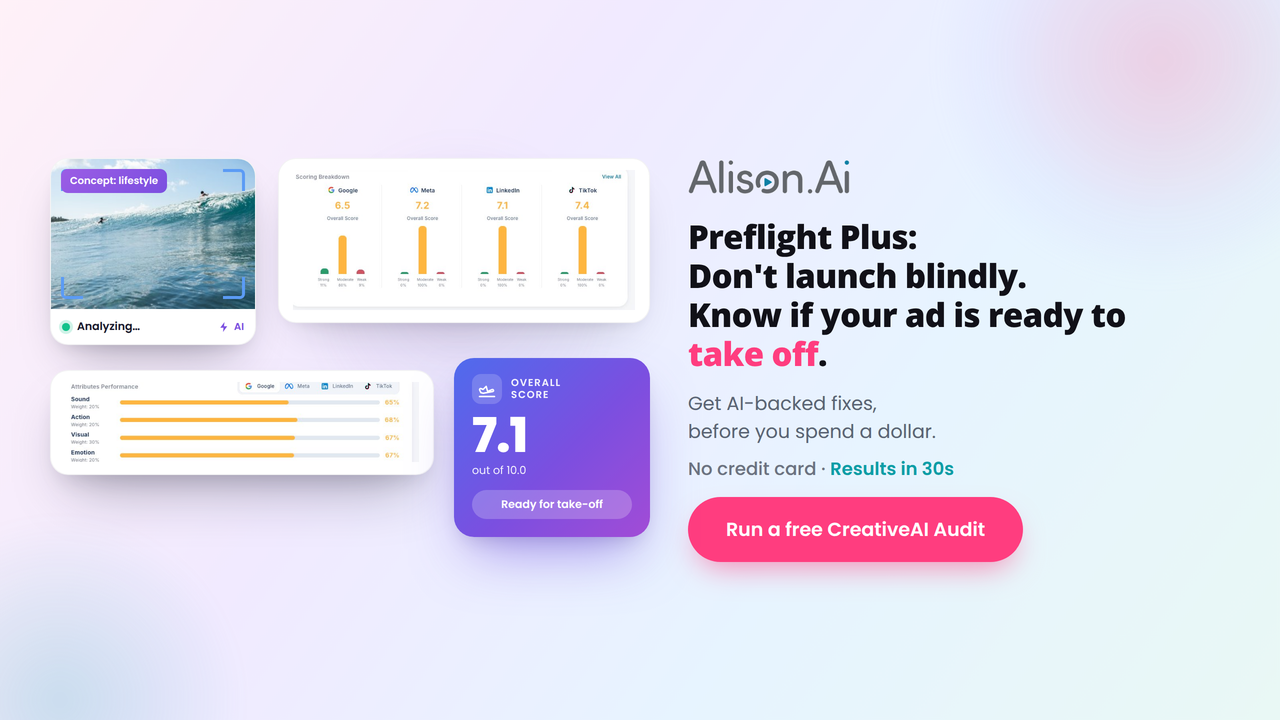
Everyone reviewed the creative, everyone signed off, and it still tanked because nobody was checking the right things. The worst part is it was all fixable before it ever went live.
Alison.ai's Preflight Plus scores your video against Meta, Google, TikTok, and LinkedIn frameworks in 30 seconds before a single dollar leaves your account. You get an Adherence Score plus specific, actionable fixes so only your strongest assets ever see paid media.
- Ferrara caught a weak hook in pre-flight and walked away with 84% more 3-second views.
- Tango audited before spending a dollar and saw IPM lift 56% on launch day.
- Murka rebuilt fatigued creatives using audit insights and pulled 68% higher ROAS on every new concept.
One upload. Thirty seconds. You'll know exactly what's broken and how to fix it.
Run your free CreativeAI Audit now - no credit card needed.
🐥 Tweet Worth Saving
Thanks for being part of the WAW team 💃 We’d love to know if this was helpful so we can continue playing it smart with the right strategies.