Too many creators kill decision
🔍 Choice overload is killing your creator selection for every, and more!

Hello! You've arrived at What Actually Works 🤓
We break down the real strategies, decisions, and plays that actually move the needle in your marketing, and here it for today.
🔍 Too many creators kill decision
Creator supply grew roughly 93% over the past year, nearly doubling the pool offering UGC and creator content services.
That's supply growth most categories never see this fast, and it's genuinely good news for a brand building a roster, since there are simply more options than a year ago.
It's also what's making it harder to find the creators worth working with, because a search that used to return a manageable shortlist now returns a flood, and volume alone doesn't tell you who's good.
The instinct in a market flooded with supply is to widen the funnel and screen faster, more applications reviewed per hour, quicker yes-or-no calls.
That approach scales the same evaluation mistakes across more candidates rather than fixing the actual bottleneck: the speed and reliability of figuring out who's worth a brand's time before spending real budget finding out the hard way.
Build a fast screening layer before evaluating on full creative quality
Reviewing every applicant with the same depth you'd give a finalist doesn't scale once the pool has nearly doubled, and many teams respond by screening less carefully or getting backed up in the pipeline.
Create a first-pass filter based on objective signals, past brand fit, platform-native engagement patterns, and response time in initial contact, before anyone spends time on deeper creative review. That filter doesn't need to be perfect.
It needs to cut the pool to a size where deeper evaluation is feasible. Building that filtering infrastructure at scale, rather than manually reviewing a flood of applicants one at a time, is part of what Insense helps ecommerce brands do.
Weight proven performance over supply-driven price competition
A larger creator pool tends to push rates down, and the temptation is to chase the lowest bidder among applicants who look similar on paper, which is exactly how a glutted market produces worse average outcomes even as options multiply.
Prioritize creators with a track record, even a short one, over unproven applicants offering a lower rate, since the cost of a bad partnership, wasted production time, weak content, usually outweighs the savings from a cheaper unproven option.
Treat sourcing itself as a capability that needs to scale with supply
A sourcing process built for a smaller market doesn't automatically work at twice the volume. Forcing it means slower decisions, worse decisions, or a team that's underwater.
Right now that's a quality problem. In six weeks it's a revenue one, because by October CPMs can already be running 20 to 60% higher than they are today.
Work the BFCM calendar backward. Ads need to be live and tested by early November. Testing needs winners identified in October. Winners need content in hand by late September, which means the creators shooting that content should already be briefed.
Miss that chain anywhere and you end up in November buying expensive attention while still chasing creators, approvals, and usable content.
Insense's creator marketing playbook is that calendar, built out week by week from September through January, with a deadline and a purpose attached to every campaign rather than a vague sense that Q4 is coming.
It also covers the four shifts that changed how Q4 gets won this year, a method for sourcing the right creators inside 48 hours, and how to time organic against paid through BFCM into the mid-December-to-January Q5 window most brands never budget for. You can get the playbook for free here.
More creators available isn't the same as more good creators found. That gap is exactly where a glutted market quietly costs a program not built to filter it.
Partnership with AirOps
Your Buyers Asked AI. Did Your Brand Appear?
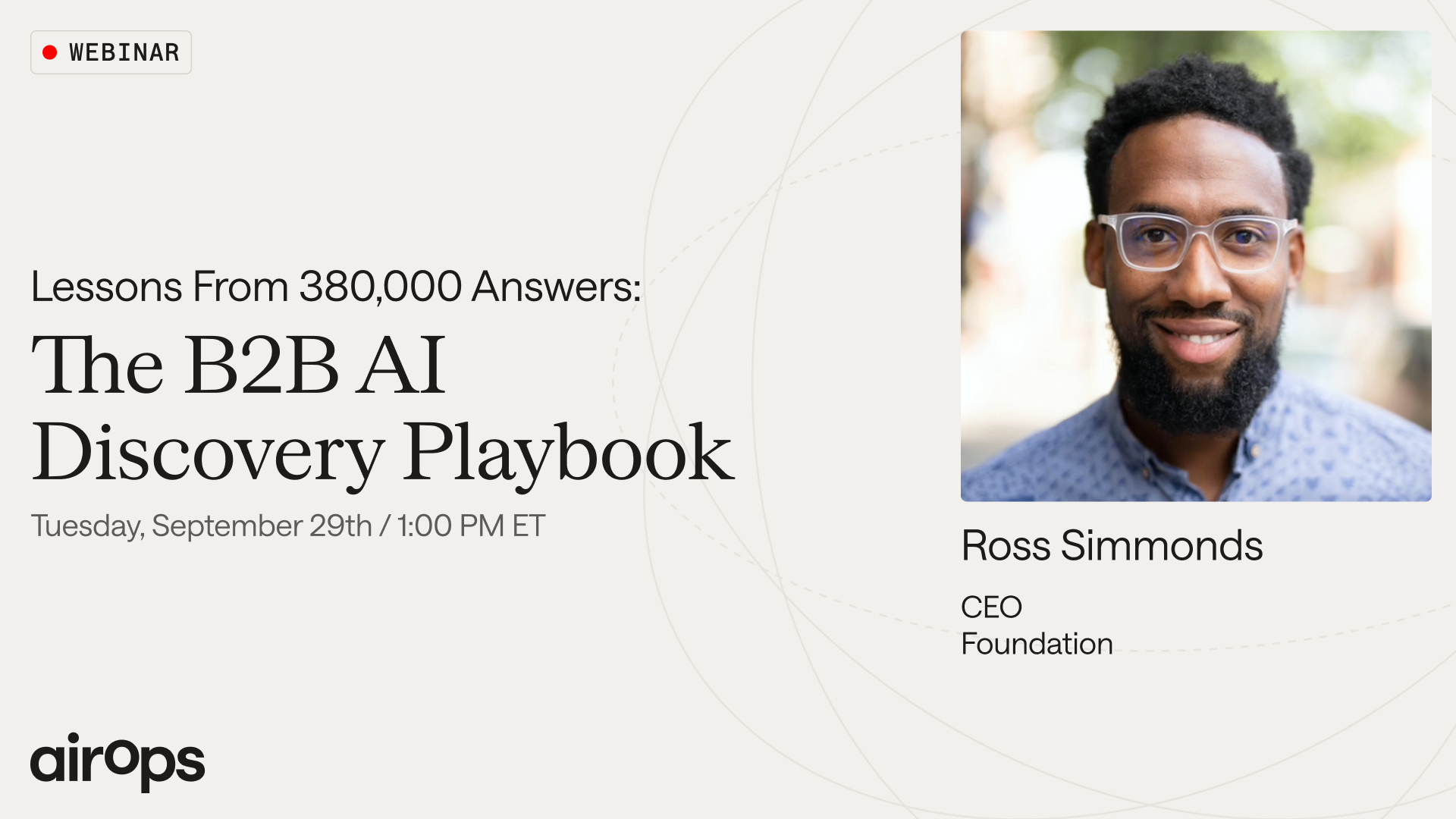
AI is already deciding which B2B tools reach your buyers’ shortlists. If your brand is missing from trusted sources, competitors can win consideration before sales enters the conversation.
On September 29, Foundation CEO Ross Simmonds and AirOps search marketing lead Josh Spilker will unpack research spanning nearly 380,000 AI answers, 3 million citation events, and 81 enterprise software topics.
You’ll walk away knowing how to:
- Build a platform-specific source map across six AI engines, showing where to earn visibility for the buying prompts that matter
- Turn the 84-of-100 dominance of comparison pages and listicles into a clear publishing plan for content AI platforms already cite
- Find and fix unfavorable comparisons before they spread across hundreds of answers and quietly steer buyers toward competitors.
You’ll leave knowing which prompts to track, which sources to prioritize, and where your team should invest first to influence AI-driven buying decisions.
Join live at 1 p.m. ET on September 29.
Can't attend the session live? Register anyway, and you’ll get the recordings in 24 hours.
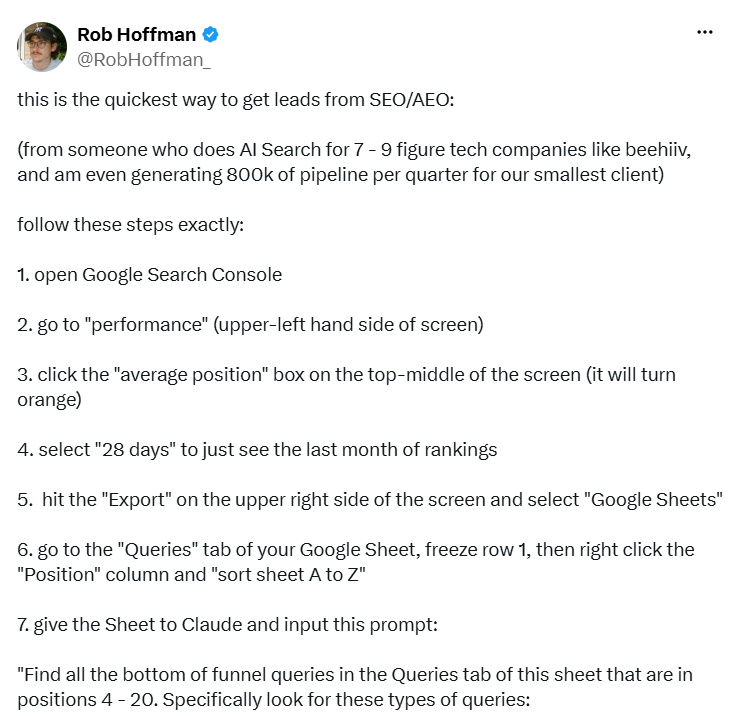
🐥 Tweet Worth Saving
🥳Events
🔥 What Makes a Creator Program Worth More Budget
October 21 | Online | Free Festival
See how experienced teams prove creator impact before asking for more spend. Leaders from Adobe, ŌURA, Edelman, Ogilvy, and more will break down the metrics, campaign decisions, and operating systems that help creator programs earn trust, budget, and room to scale.
Can't attend every session live? Register anyway, and you’ll get the recordings in 24 hours.
🔥 What High-Growth Brands Are Doing Beyond Meta Right Now
October 29 | The Glasshouse, NYC | Free In-Person Event
See how leading teams are expanding acquisition through TV, Reddit, and other channels without losing revenue accountability. Hear directly from Reddit CEO Steve Huffman, Cody Plofker, and growth leaders already making these trade-offs at scale.
Thanks for being part of the WAW team 💃 We’d love to know if this was helpful so we can continue playing it smart with the right strategies.