The Only Email Math You Need
👀Fixing the email math and making it the indestructible norm, and more!

Hello! You've arrived at What Actually Works 🤓
We break down the real strategies, decisions, and plays that actually move the needle in your marketing, and here it for today.
👀The Only Email Math You Need
Paid media teams live by forecasts they can't control. CPMs shift. Auctions are clearly unpredictable. Impression volume swings with seasonality and competitor spend.
Email is the opposite. You decide the outbound. Which means your revenue isn't a guess, it's arithmetic waiting to happen. Most brands still treat email as a feel-good channel with rough targets. "We'll grow 15% this year." But every dollar in email flows from inputs you already own. You just haven't mapped them yet.
Start with two calibration numbers
Before you model anything, get these two inputs locked:
- Paid growth rate: Your ads team's projected new buyer volume for the year. This drives welcome flows, post-purchase sequences, and first-time buyer audiences. Apply it only where new transactions trigger entry.
- List growth rate: Your compound mailable list growth pulled from your ESP, year-over-year. This is a balance sheet metric. Addresses accumulate and churn slowly. If paid doubles, your list won't follow.
Mixing these two rates is where most forecasts collapse. They run different parts of the model on purpose.
Break revenue into six distinct pools
Not every pool is equal. The first three are your primary drivers. The last three are support flows.
Campaigns are your largest lever. Take last year's campaign revenue, divide by total campaign emails sent, and you get revenue per email. Multiply the projected list size by the planned send volume by that rate. This single number usually accounts for the majority of email revenue, and it's fully within your control.
Welcome scales with subscriber intake, not total list size. New subscribers times flow length times revenue per recipient. Apply your paid growth rate here, not list growth.
Abandonment works differently from everything else. It scales with sessions, not subscribers. Divide last year's abandonment emails sent by total sessions to get your abandonment rate per session. Project sessions forward and apply that ratio. If you run multiple abandonment triggers (browse, cart, checkout), model each separately.
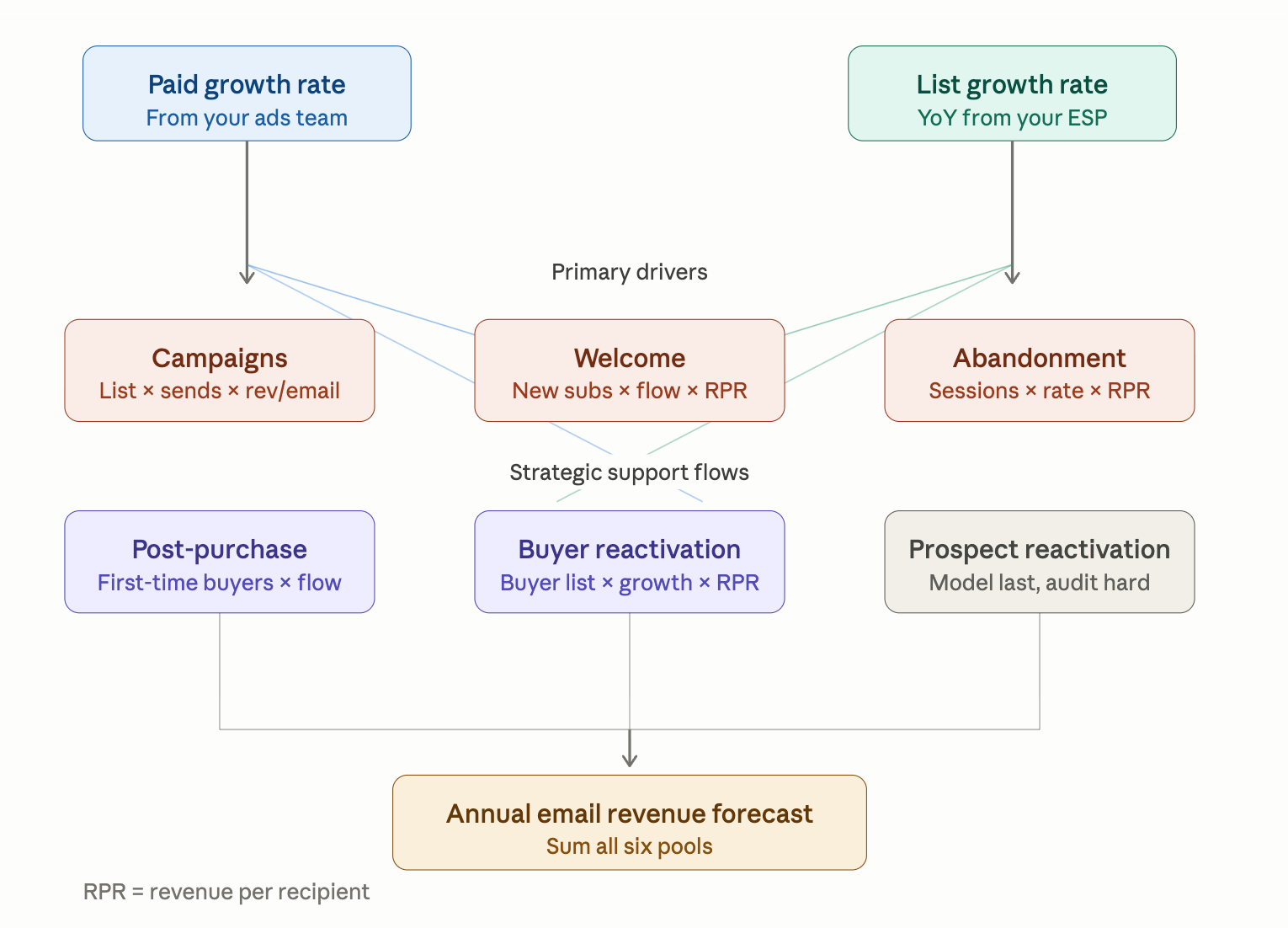
The three support flows follow a consistent pattern:
- Post-purchase: pull total buyers, subtract repeat purchasers, and apply paid growth factor. Multiply by flow length and revenue per recipient.
- Buyer reactivation: buyer mailable list times list growth times flow revenue per recipient. Often accounts for the largest share of ESP revenue, yet most brands leave it unmeasured in a vague "retention" bucket.
- Prospect reactivation: same structure as buyer reactivation, but scrutinize this one hard. It frequently underperforms and can suppress deliverability if the audience isn't clean.
The immediate unlock
Run this once. The gaps between what you assumed and what the math produces will tell you exactly where to focus before this month ends. Usually, it's one of three places: campaign send frequency is lower than it should be, abandonment coverage is incomplete, or buyer reactivation is sitting inactive and unmeasured.
You control the outbound. That means you control the number.
Partnership with Omnisend
150,000 brands can't be wrong about email marketing

Your email tool should be making money. Right now, it's probably just making work.
Omnisend changes that. Campaigns that actually pay off, a platform so intuitive it feels like you built it, and a real support team on call around the clock - brands average $79 back for every $1 spent on Omnisend.
Here's what that looks like in practice:
- Dukier grew revenue 525%, with 55% of it coming from automations they set once
- Kate Backdrop hit a 1:300 ROI across omnichannel campaigns
- Vagari Bags pulled a 1:121 ROI from SMS alone
Over 150,000 brands already trust Omnisend - and 69% of their revenue runs on autopilot through automations they set once, with 17.3% higher CTRs to show for it.
You're up and running in 30 minutes. Fully migrated in 5 days.
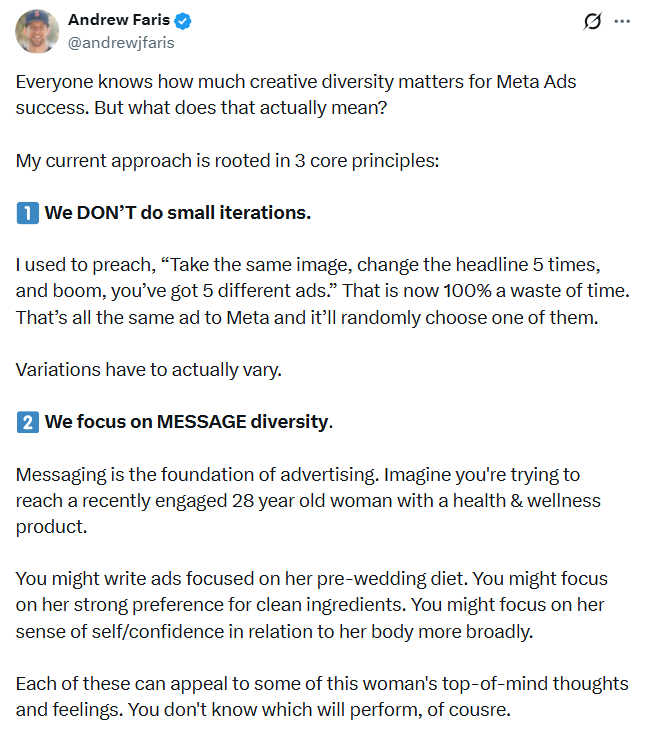
🐥 Tweet Worth Saving
Thanks for being part of the WAW team 💃 We’d love to know if this was helpful so we can continue playing it smart with the right strategies.