The Account That Knows Too Much
✋More campaigns. more ad sets. more segmentation. more control. is a myth, and more!

Hello! You've arrived at What Actually Works 🤓
We break down the real strategies, decisions, and plays that actually move the needle in your marketing, and here it for today.
✋The Account That Knows Too Much
More campaigns. More ad sets. More segmentation. More control.
That's the story media buyers tell themselves when an account starts underperforming. Add structure. Add specificity. Get closer to the problem.
What they're actually doing is making the problem permanent.
Meta's algorithm has one job: find the people most likely to convert. It does that by studying conversion events. Feed it enough of them, it gets smarter. Starve it, by spreading budget so thin across so many ad sets that none of them accumulate real signal, and it never gets off the ground. You stay in the learning phase longer. Results stay volatile. And every week without clarity becomes justification for adding another layer.
It's a trap that looks like diligence.
Here's what nobody wants to say out loud: most over-engineered accounts aren't built for performance. They're built for comfort. Granular segmentation feels like expertise. A 40-line campaign list feels like effort. It's easier to point at structural complexity than to admit you don't know which creative is actually working, because the budget's been spread too thin to tell.
The fix isn't sophisticated:
- One campaign testing creative. Real budget. Fast signal.
- One campaign scaling winners. Algorithm fed, not starved.
- One campaign retargeting. Isolated, measurable, honest.
Three campaigns with room to breathe produce more usable data than twenty campaigns gasping for spend. The reads are cleaner. The decisions are faster. The algorithm isn't trying to learn from a handful of events per ad set, it's actually learning.
Structure should create clarity, not substitute for it. When you can't immediately answer "which creative concept is driving the most purchases right now" that's not a reporting problem. That's an architecture problem.
Every layer you add beyond what's necessary is a question you've made harder to answer.
In a market where targeting has largely been handed to the machine, the only edge a buyer still owns is speed -- how quickly they spot a winner, kill the waste, and redeploy. Bloated account structure kills that speed at the source.
Trim the account. Concentrate the signal. Let the algorithm do what it's actually good at.
The best-performing accounts in 2026 won't be the most complex. They'll be the ones that gave the machine the cleanest possible environment to work in – and got out of the way.
Partnership with AirOps
Stop satisfying the algorithm. Start getting retrieved.
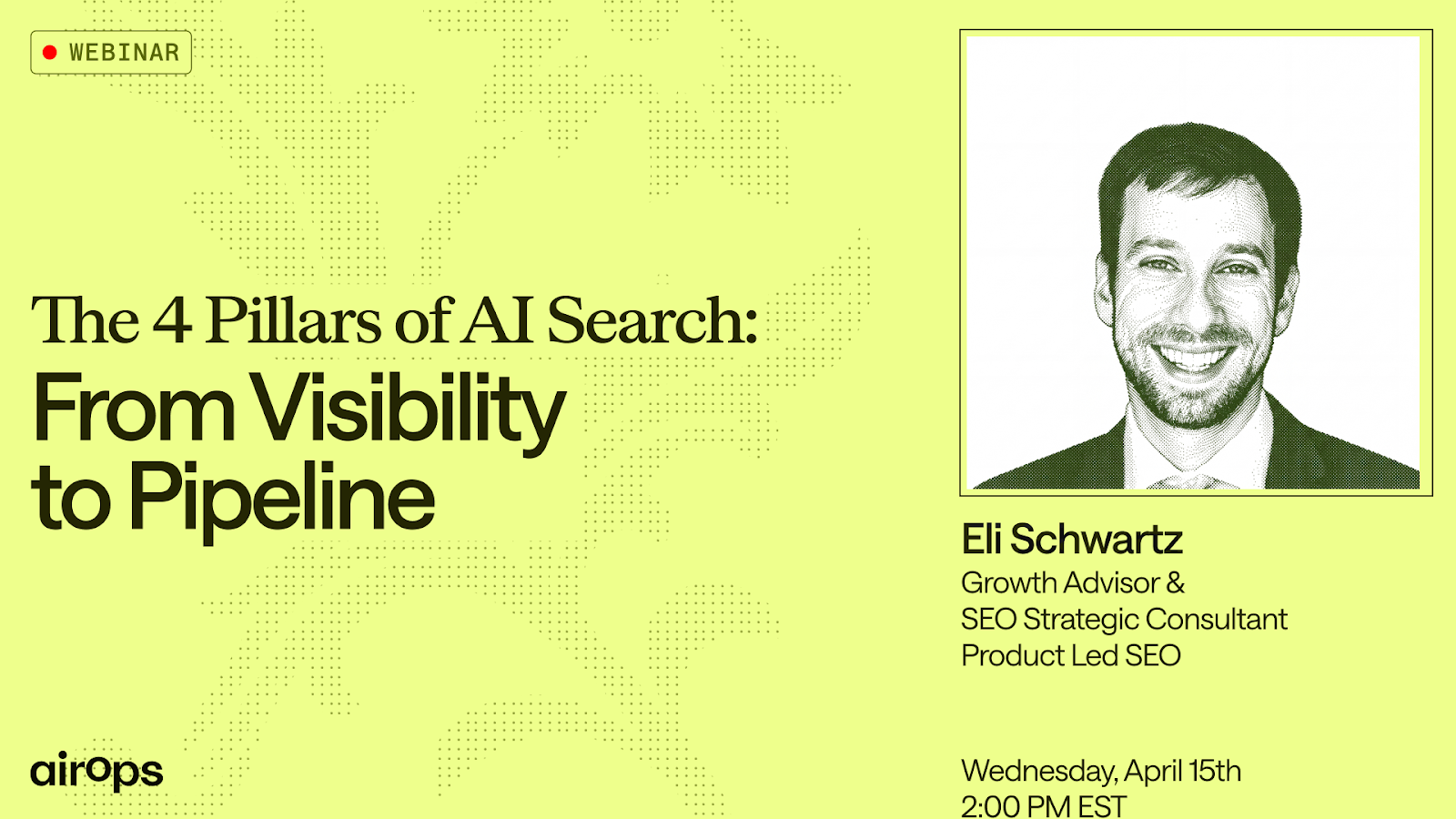
AI answers don't reward rankings. They pull from content that signals trust, structure, and relevance at the passage level. If your brand isn't being retrieved and cited, you're invisible where decisions are already being made.
Join AirOps on April 15th at 2 PM EST for a live session with Eli Schwartz, Growth Advisor and Author of Product-Led SEO.
Eli has created billions in organic search revenue, consulting with companies like Coinbase, Tinder, LinkedIn, Gusto, Quora, Zendesk, and more.
He’ll break down the exact framework he's shared with board rooms and VCs for how AI search is functioning now in 2026. You'll walk away knowing:
- The 4 pillars that determine whether AI retrieves your content
- How to identify the highest-leverage SEO stages to fix first
- Why deep customer research is still the most underused edge in AI visibility
One live session. A framework you can action the same week.
Can't make it live? Register anyway and get the recording within 24 hours.
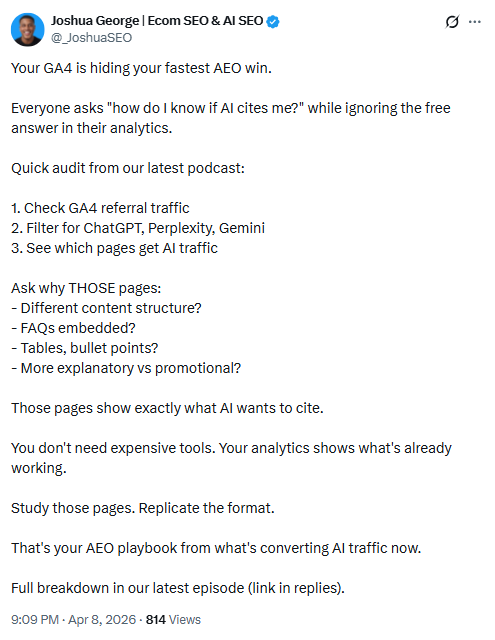
🐥 Tweet Worth Saving
Thanks for being part of the WAW team 💃 We’d love to know if this was helpful so we can continue playing it smart with the right strategies.