No platform sees the real number
👀 Each streaming service caps frequency within its own walls. None of them see what the same household saw everywhere else, and more!

Hello! You've arrived at What Actually Works 🤓
We break down the real strategies, decisions, and plays that actually move the needle in your marketing, and here it for today.
👀 No platform can see how many times your ad actually hit the same household
Frequency capping works fine inside a single streaming service, since that platform sees every impression it serves to a household and caps accordingly.
It breaks down the moment a plan spans multiple services, which is how most CTV plans run, because no platform sees what a different platform served the same household.
A household hit five times on one service and five times on another looks, from each platform’s view, like a household that saw the ad five times. From the household’s actual view, it saw the ad ten times.
That gap is a structural feature of how CTV buying works today, not a bug any single platform will fix, since fixing it would require sharing household-level exposure data across competing services with no incentive to hand that visibility to each other.
A media plan running across several streaming platforms accumulates overexposure nobody on the buying side can currently see in full, and overexposure past a certain point stops building recall and starts producing fatigue instead.
Estimate your actual cross-platform frequency, not just your per-platform number
Every platform in your media plan can report frequency within its own walls accurately. None of them can report the number that actually matters, total household exposure across everywhere you’re buying.
Build a rough cross-platform frequency estimate using your total impression volume against your addressable household count in the target market, even as an approximation.
An imperfect estimate accounting for the multi-platform reality is more useful than individually accurate numbers that miss the total entirely.
Stagger platform-level frequency caps to approximate a household-level ceiling
Since no platform can see the other’s exposure, the practical fix is setting each platform’s individual cap lower than you would if it were your only channel, deliberately leaving room for exposure happening elsewhere.
If your target total household frequency is five impressions across a flight, and you’re running across three platforms, capping each at five independently guarantees overexposure. Divide the target more conservatively across platforms instead, even though it feels like leaving reach on the table on any single one.
Measure fatigue directly rather than trusting frequency caps to prevent it
Since platform-level caps can’t fully solve the cross-service visibility gap, the more reliable signal is watching for fatigue directly: declining completion rates, rising negative sentiment, brand search lift flattening despite continued spend.
The deeper fix isn’t better estimating. It’s not buying through three sets of walls to begin with.
Tatari is a convergent TV platform: streaming, linear, and online video planned, bought, and measured in one place, which means household exposure is counted once across the whole plan instead of reassembled from reports that each stop at their own perimeter.
Vuori, Nutrafol, Calm, Ro, Magic Spoon, and Fiverr all buy this way. It runs self-serve for a first TV flight or full-service at nine-figure spend.
Fifteen minutes with their team will tell you what your current plan is actually delivering per household. You can get started for free here.
Every platform swears the frequency looks fine. The household seeing the ad from all of them at once is the only one with the complete picture, and it isn’t reporting back.
Partnership with Modash
You See Their Creator Campaigns. Now Hear Their Thinking.
A creator campaign can look great in your feed and still leave you wondering whether you’d pay to run it again.
Repeating that uncertainty with more creators gets expensive.
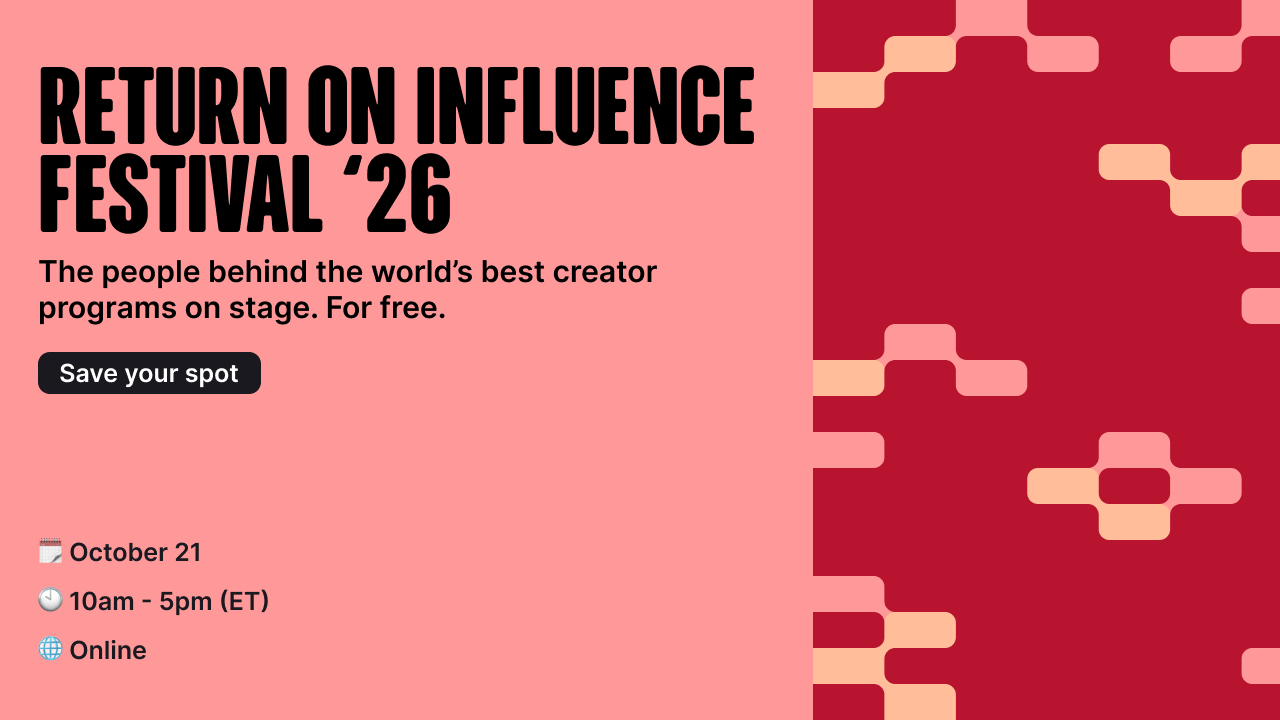
On October 21, Modash’s Return on Influence Festival ’26 opens up how established teams run their programs, including the mistakes behind better campaigns.
Here’s what you’ll learn:
- How teams run campaigns day-to-day, including what they changed after mistakes.
- What creators want from brand partners so that you can approach collaborations from their side.
- What it takes to scale from 5 to 5,000 creators before adding more to your own program.
You’ll hear from Maya Shaff, Head of Influencer at ŌURA, and Josh Rangel, Senior Director, Social Strategy at Ogilvy. More to be announced. It’s online and free.
Reserve your spot for Oct 21st and leave with actionable insights to build and scale a creator program that moves the needle.
Can't attend every session live? Register anyway, and you’ll get the recordings in 24 hours.
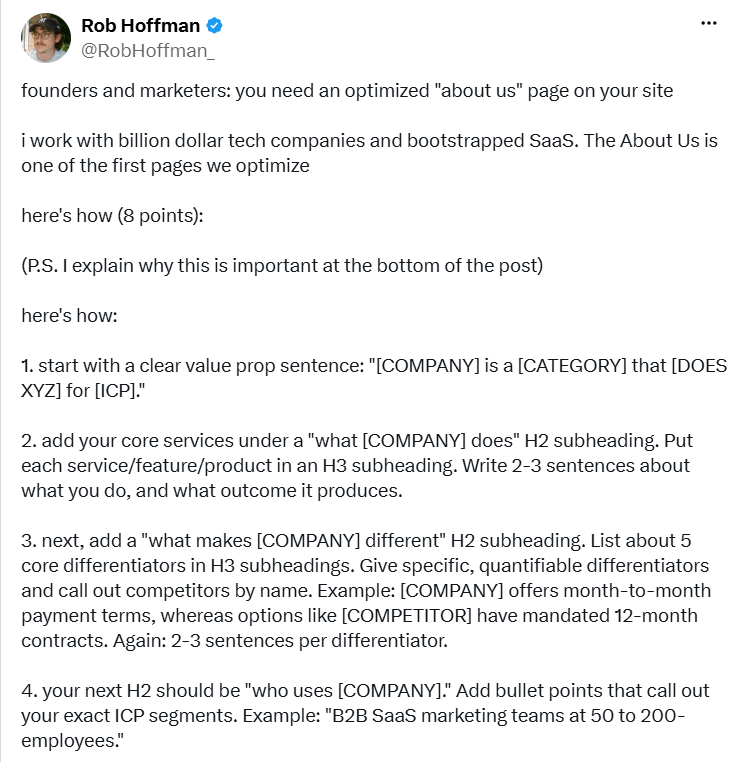
🐥 Tweet Worth Saving
🥳 Events
🔥 Where AI Actually Looks Before Recommending Your Brand
September 29 | 1 PM ET | Virtual Event
Using 3 million citation events across 81 enterprise software topics, Foundation CEO Ross Simmonds and AirOps’ Josh Spilker reveal which third-party sources influence AI shortlists. See where your category gets cited, which gaps cost consideration, and where your next content investment should go.
Can't attend the session live? Register anyway, and you’ll get the recordings in 24 hours.
🔥 What High-Growth Brands Are Doing Beyond Meta Right Now
October 29 | The Glasshouse, NYC | Free In-Person Event
See how leading teams are expanding acquisition through TV, Reddit, and other channels without losing revenue accountability. Hear directly from Reddit CEO Steve Huffman, Cody Plofker, and growth leaders already making these trade-offs at scale.
Can't attend the session live? Register anyway, and you’ll get the recordings in 24 hours.
Thanks for being part of the WAW team 💃 We’d love to know if this was helpful so we can continue playing it smart with the right strategies.