ChatGPT cited you but Claude didn’t?
🥲Claude and ChatGPT agree on almost nothing. only 8% of cited sources overlap, and more!

Hello! You've arrived at What Actually Works 🤓
We break down the real strategies, decisions, and plays that actually move the needle in your marketing, and here it for today.
🥲ChatGPT Cited you but Claude Didn’t?
Many brands have started tracking “AI visibility” as a single metric. It sounds sensible until you look at how different AI platforms actually build their answers.
Research highlighted by Search Engine Land found that Claude and ChatGPT share only 8% of their cited sources, while more than 80% of pages cited by AI engines don’t rank in Google’s top 10. Those numbers point to one conclusion: AI visibility isn’t one competition. It’s several running in parallel.
That’s why one blended score can hide a very uneven reality.
The average can conceal a major weakness
Imagine a brand performing exceptionally well in ChatGPT but barely appearing in Claude.
Viewed separately, that’s an obvious gap. Viewed as one combined visibility score, it can look merely average.

Those are two very different diagnoses, and they lead to different priorities.
Compare platforms before changing your strategy
A useful audit doesn’t require complicated tooling.
Run the same group of core prompts through ChatGPT, Claude, Gemini and Perplexity. Record which sources each platform cites and compare the results side by side.
You’ll quickly see whether you’re dealing with one platform that needs attention or a broader authority problem.
A brand that’s visible everywhere but underperforming slightly needs a different strategy from one that’s dominating two platforms while disappearing completely from the other two, even if both situations produce the same average visibility score.
Measure the platforms separately before combining them
The deeper lesson is that every AI platform appears to reward a slightly different mix of sources, structures and signals.
Treating them as one environment makes it much harder to understand why content succeeds in one place but fails somewhere else.
That’s why AirOps’ State of AEO 2026 breaks AI visibility into separate measurements such as citation rate, mention rate, share of voice, sentiment and source attribution instead of collapsing everything into a single score. You can get the State of AEO Report.
An average visibility number is useful for spotting trends.
It isn’t detailed enough to tell you which competition you’re actually winning.
Partnership with AirOps
Your Rankings Hide a Bigger Visibility Problem
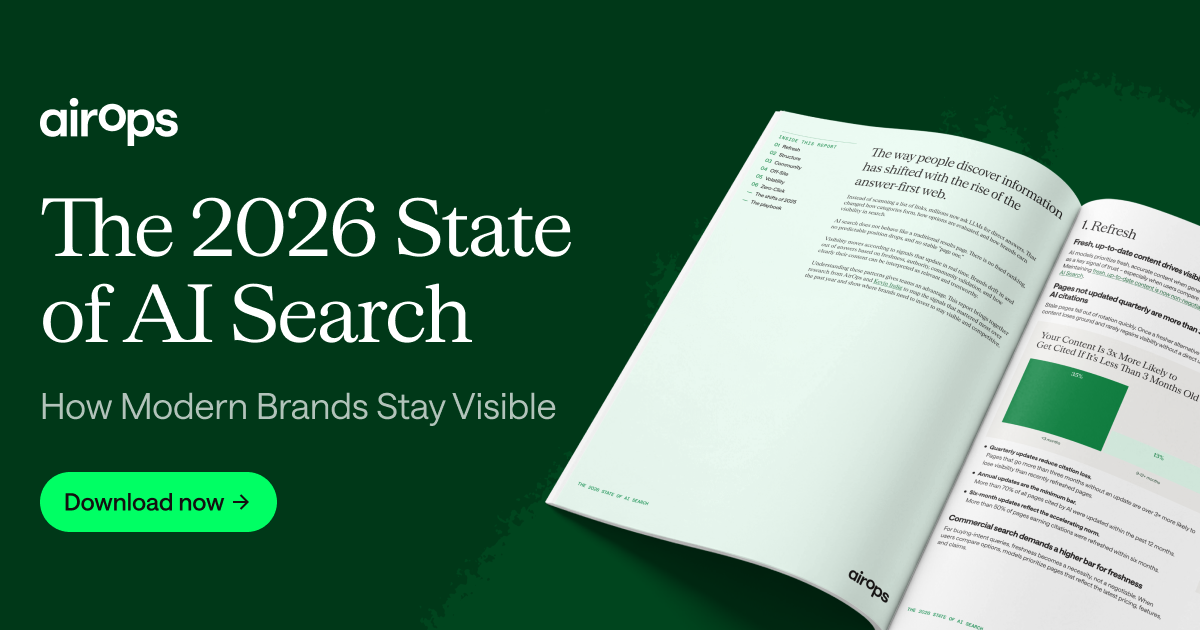
A top-20 position can look reassuring while AI Overviews recommends somebody else.
AirOps found that 59.6% of AI Overview citations come from URLs outside the top 20 organic results. Your rankings can look healthy while your brand is absent from the answers shaping discovery.
The State of AEO 2026 shows you how to find and close that gap:
- Find which pages to refresh first and the right cadence for your industry and search intent.
- Learn which structural elements improve citations, from heading hierarchy to schema and lists.
- See which third-party sources shape AI discovery and where your brand needs to appear.
Searches ending without a click have increased 2.5x since AI Overviews launched. More buying journeys are now being influenced before someone reaches your site.
If AI visibility is becoming part of your growth target, this report gives you the benchmarks and signals to audit against your own performance.
🐥 Tweet Worth Saving
Thanks for being part of the WAW team 💃 We’d love to know if this was helpful so we can continue playing it smart with the right strategies.