Ad fatigue is a size problem
🥲Yep! And you keep mistaking it for a time problem, and more!

Hello! You've arrived at What Actually Works 🤓
We break down the real strategies, decisions, and plays that actually move the needle in your marketing, and here it for today.
🥲Ad Fatigue Is Not a Time Problem. It Is a Size Problem.
The conventional response to ad fatigue is to reach for settings. Frequency caps. Creative rotation schedules. Audience exclusions. Refresh cycles.
These interventions share an underlying assumption: the ad has aged, people have seen it too many times, and the solution is to limit exposure or replace the creative. That assumption is mostly wrong, and the wrong assumption produces the wrong solution.
A more accurate model: every ad speaks to a specific pocket of the market. The angle, the hook, the emotional entry point, these do not reach your entire addressable audience. They reach the subset for whom that particular framing resonates.
Some pockets are large. Some pockets are small. And when an ad fatigues, what has actually happened is that you have reached most of the people that angle was ever going to convert. The pocket is not empty of humans. It is empty of humans for whom this specific framing works.
This reframe changes everything about what the solution looks like. Frequency caps do not create new audience for an angle that has reached saturation. Exclusions do not expand the pocket.
Rotating creative keeps the same angle in different clothes. None of these interventions addresses the actual cause, which is that the angle has reached its addressable market size and cannot grow beyond it regardless of how fresh the execution looks.
The practical test for pocket size is spend-to-CPA by creative angle, tracked over time. An ad that holds CPA efficiently at $2,000 daily spend and degrades at $5,000 is a small-pocket angle. An ad that holds CPA at $10,000 daily spend is a large-pocket angle.
The ceiling is set by the angle, not by the creative execution, and the ceiling is what you are actually discovering when you scale any given ad.
Small-pocket winners have a place: operate them at the spend level where they work efficiently, do not try to push them past the ceiling. Large-pocket winners are the ones that drive genuine account scale, find more of them by running net-new angle tests specifically designed to find angles with broader market appeal.
The highest-leverage creative question is not how to refresh a fatiguing ad but how to identify whether your next brief is building for a small pocket or a large one before you spend to find out.
Partnership with AirOps
There's a new ranking system running right now, and your pages aren't even on it.
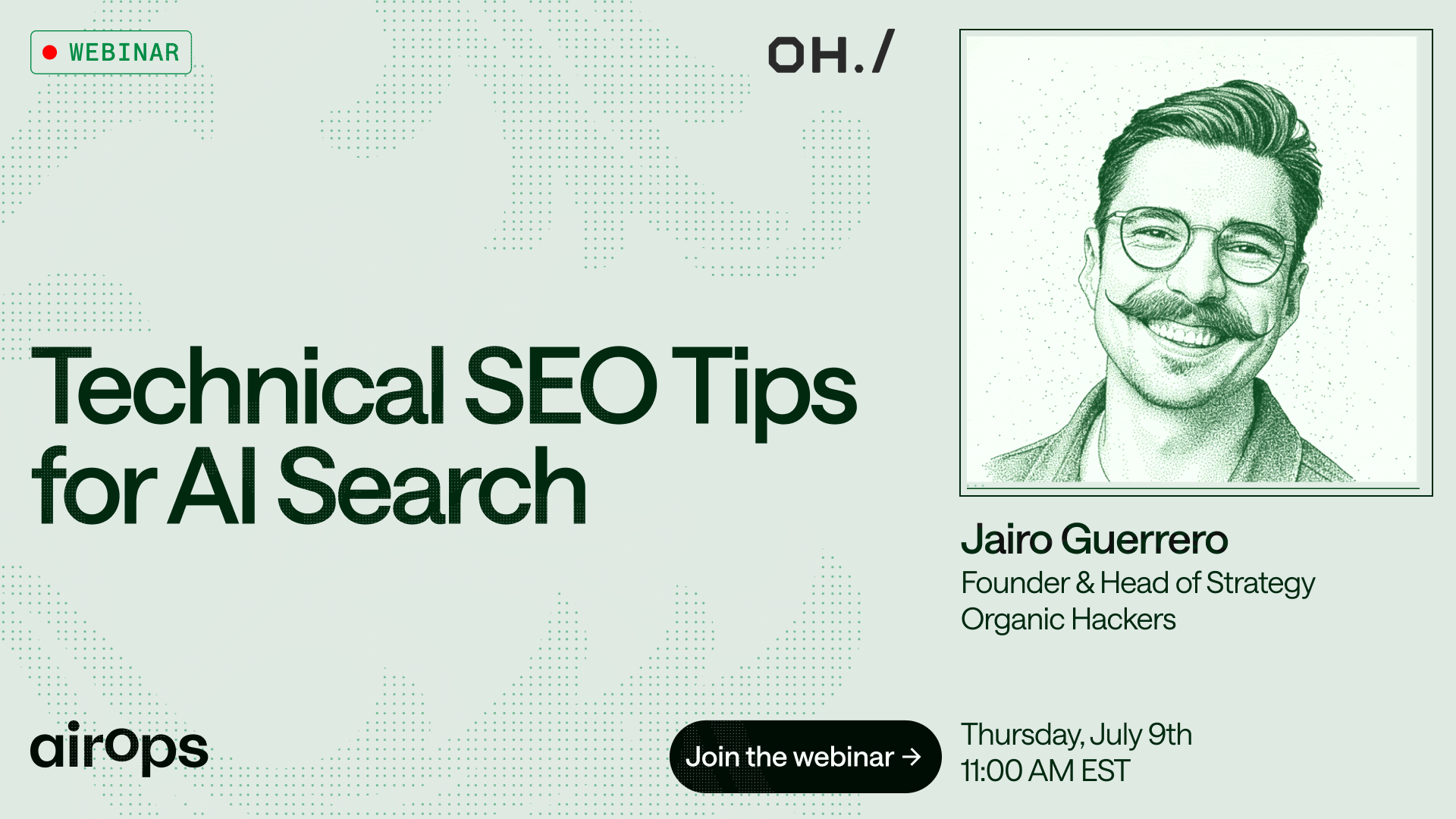
Your best page just lost a buyer to ChatGPT, and you'll never know it happened. Ranking on Google means nothing to AI search, which runs on its own rules for what gets cited.
On July 9 at 11am ET, Jairo Guerrero, Founder of Organic Hackers, shows you how to find out where you actually stand. He's spent years pulling raw server logs to see exactly how AI crawlers treat real pages, not theory, actual behavior.
You'll walk away knowing:
- How to check if AI crawlers are even reaching your pages right now
- The render and retrieval gaps that quietly disqualify strong content
- Which structured data signals actually influence what gets cited
- How to read your own server logs for crawler activity you're currently missing
This is the session that turns "why aren't we showing up" into a checklist you run the same week.
Can't make it live? Register anyway and get the recording in your inbox within 24 hours.
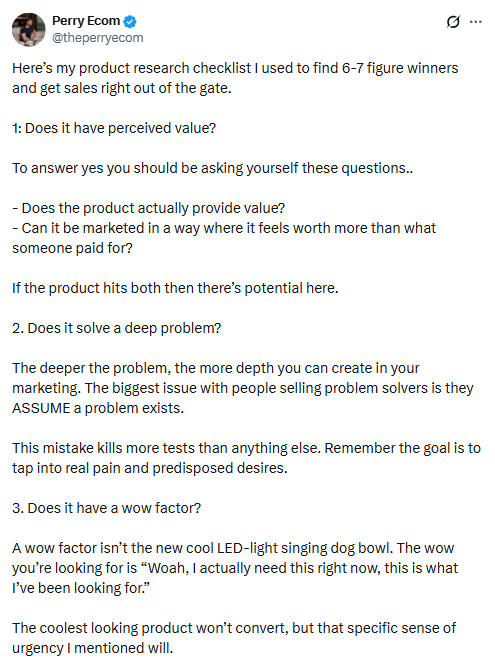
🐥 Tweet Worth Saving
Thanks for being part of the WAW team 💃 We’d love to know if this was helpful so we can continue playing it smart with the right strategies.