The tracking code was fake
🕵️ A tracking code that looked like a new Google feature was added by a browser extension, and your data may have the same problem.

Hello! You've arrived at What Actually Works 🤓
We break down the real strategies, decisions, and plays that actually move the needle in your marketing, and here it for today.
🕵️ Case File: Who's Rewriting Your URLs?
Last week an SEO noticed a new code, ?st_source=ai_overview, on links inside Google's AI Overviews. It looked like Google had started tagging AI clicks, and the find spread quickly.
The twist
It wasn't Google. The SEO later traced the code to a Chrome browser extension that was rewriting URLs, presumably to sell the data on.
Why this case is yours too
If an extension can rewrite a link on Google, it can rewrite links to your store. That puts two things at risk: the accuracy of your analytics, and who gets paid for your sales.
There's precedent. Honey, PayPal's coupon extension, was found replacing creators' affiliate cookies at checkout. In January 2026, the affiliate network Awin confirmed policy violations and suspended Honey's payments.
Here's how to investigate your own store.
Clue 1: Codes you never created
Export landing page URLs with their full query strings from your analytics for the last 30 days. Sort the parameters by frequency.
Anything you didn't create deserves a name. Your own UTMs, your ad platforms' click IDs and your email tool's tags should explain nearly everything. Unknown codes on your highest-traffic pages are your suspects.
Clue 2: The last-second winner
Open your affiliate report and filter for coupon and cashback partners. Look for orders where their click landed in the final minutes before checkout, especially when a creator or content partner sent the shopper first.
A sharp rise in that pattern during sale events is the classic sign of a last-click grab.
Clue 3: A controlled test
Set up a clean browser profile and install the three most popular coupon extensions in your category. Click a test affiliate link from a creator partner, then buy something cheap.
Check your affiliate platform. If the credit lands with anyone other than the creator, you've found your culprit.
The verdict and the fixes
- Analytics: filter unknown codes out of reports so they don't split your pages into fake duplicates.
- Affiliate terms: require coupon and cashback partners to stand down when another affiliate referred the shopper, and claw back commissions when they don't.
- Codes: issue unique codes per creator, so a code applied by an extension still credits the right person.
Run Clue 3 this week, before Black Friday traffic makes a hijack expensive. It takes under an hour, and you'll know whether your creators are being paid for the sales they drive.
Partnership with Insense
Save 40+ hrs/month in Q4 on UGC creator & influencer operations
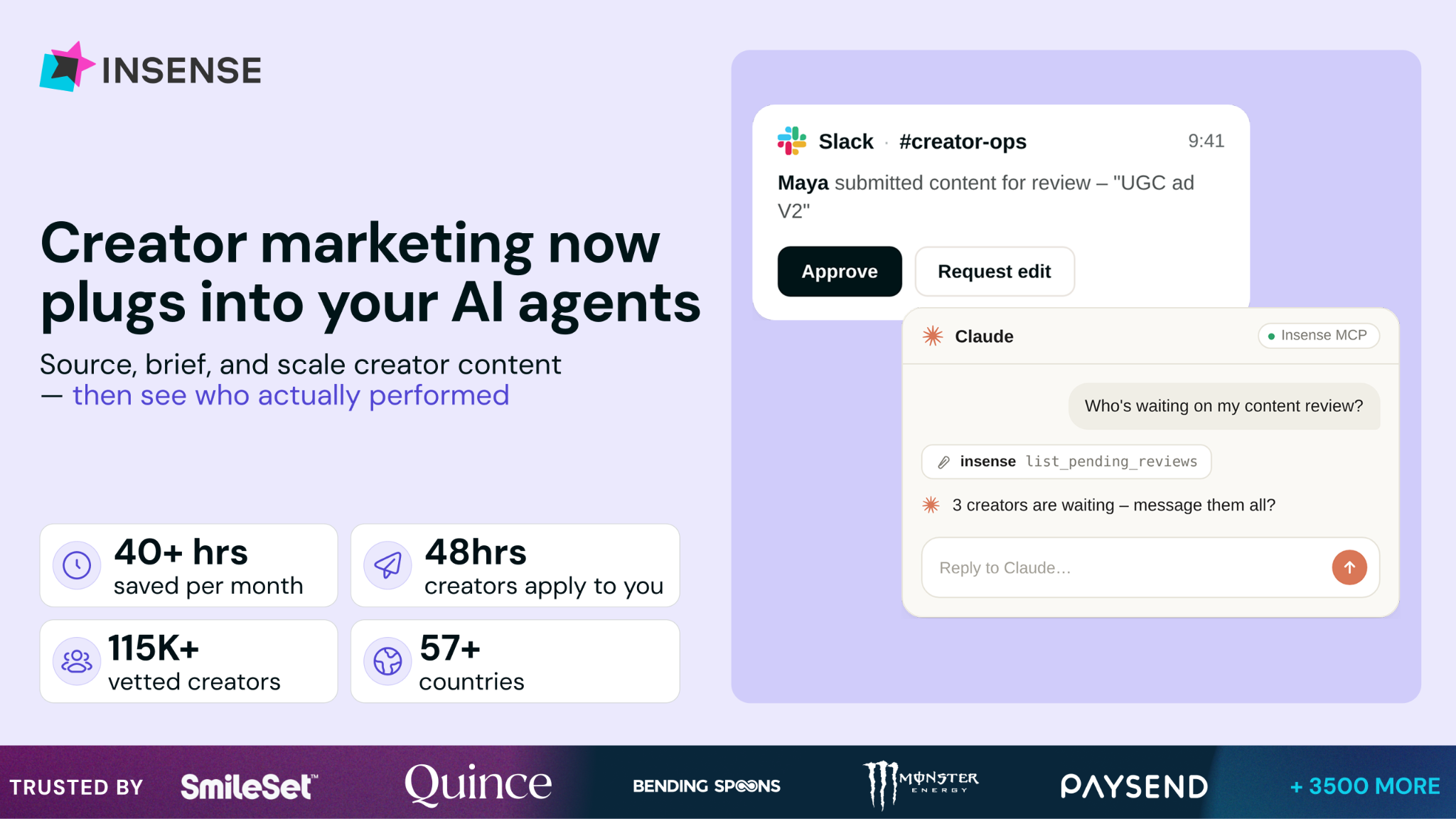
Your team already runs on Slack and AI agents. Your creator marketing should too.
Insense now plugs into the stack you already use, so you brief, approve, and track creator work without living in yet another dashboard.
Route campaigns and updates through Slack, put your AI agents (ChatGPT, Claude) to work on briefs and shortlists, and keep everything connected to your Ads Manager and analytics.
Underneath, the creator layer runs itself:
- Vetted creators apply to you within 48 hours - from a vetted marketplace of 115K+ creators across 57+ countries
- Run diverse campaign types - from UGC to seeding, influencer posting, and Meta Partnership Ads and TikTok Spark Ads
- Get creator performance insights - connect your Ads Manager and view which creators perform best - not only which ads
Over 3,500 brands and agencies use Insense, with first creator applications arriving within 48 hours and teams saving 40+ hours monthly.
Book a free strategy call by Oct 9th and get $200 towards your first campaign.
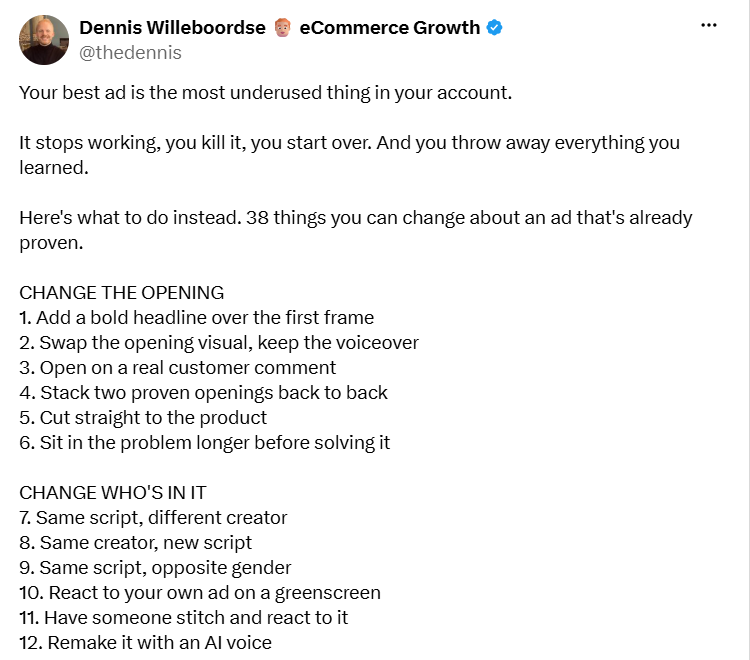
🐥 Tweet Worth Saving
Thanks for being part of the WAW team 💃 We’d love to know if this was helpful so we can continue playing it smart with the right strategies.