The 2026 growth stack
🚀 Why Google + Meta Is the Only Paid Media Stack That Scales, and more!

Hello! You've arrived at What Actually Works 🤓
We break down the real strategies, decisions, and plays that actually move the needle in your marketing, and here it for today.
🚀 Why Google + Meta Is the Only Paid Media Stack That Scales
Brands are trying to scale cold traffic on Meta alone. But rising CPMs, creative fatigue, and aggressive competition make that harder every quarter.
The brands scaling profitably right now are not relying on one channel. They are building an intent system.
Below is the structure that consistently works in 2026 and what to watch for if you want it to compound.
Google as the Intent Capture Layer
Google captures demand that already exists. When someone searches your category, competitor, or product type, they are not browsing. They are evaluating.
The Catch:
If search and shopping are underfunded because they “lack scale,” you may be starving your highest intent traffic source.
If branded search volume is declining, that is often an early warning that your awareness and trust layers are weakening upstream.
Google is not a growth hack. It is your revenue stabilizer.
Meta as the Warm Harvest Engine
Meta performs best when it harvests intent, not when it manufactures it from scratch.
Retargeting Google visitors, engaged users, and site traffic consistently produces stronger efficiency than broad cold scaling.
The Catch:
If Meta is optimized primarily for cold prospecting with little retargeting depth, you may be forcing it to create demand instead of converting it.
If blended ROAS looks fine but retargeting pools are shrinking, long-term efficiency may decline quickly.
Meta works best when it closes loops that other channels open.
YouTube as the Trust MultiplierHigh AOV or considered purchases rarely convert on one touch.
Long-form reviews, walkthroughs, and comparison videos build durable credibility that lifts conversion rates across search and retargeting.
The Catch:
If customers frequently ask questions already answered in competitor YouTube reviews, you may be losing trust at the evaluation stage.
If branded search converts inconsistently, it may signal weak validation content upstream.
YouTube is not just awareness. It is conversion infrastructure.
Offline Intent Seeding as a Demand Spark
Search volume eventually plateaus.
When that happens, the next lever is seeding incremental awareness before the search ever occurs.
Some brands do this through PR or podcasts. Others experiment with premium shared direct mail placements that introduce the brand inside trusted households, then measure the lift in branded search and retargeting performance.
Programs like Share Local Media’s Shared Mail have made this type of testing operationally simple for brands that want to experiment without heavy upfront commitment. April Shared Mailings close on 3/2. Secure your spot now!
The Catch:
If branded search is flat despite strong performance marketing, you may need an upstream awareness layer.
If Meta efficiency improves when branded search rises, you are already seeing the system effect in action.
Offline does not replace digital. It feeds it.
Finally
Google captures existing demand. Meta harvests it efficiently. YouTube reinforces trust.
Offline channels can quietly spark new intent. The most effective paid media programs do not rely on one channel to do everything. They build a system where each layer strengthens the next.
If you are scaling spend this quarter, audit whether your channels are competing for credit or working together to compound intent.
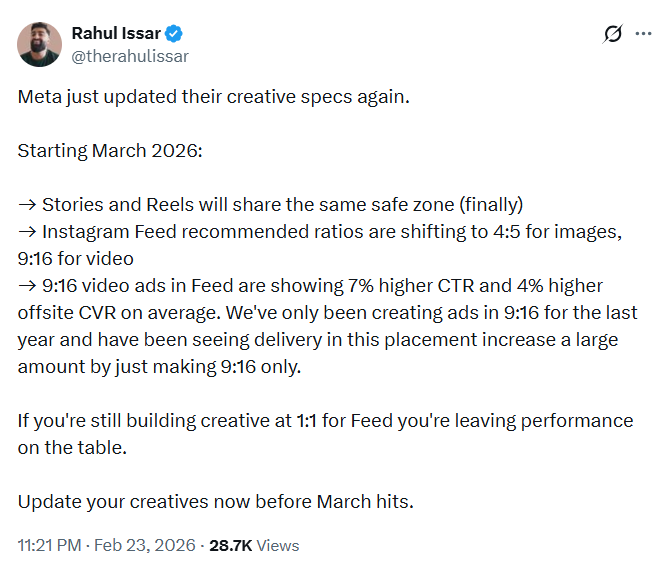
🐥 Tweet Worth Saving
Thanks for being part of the WAW team 💃 We’d love to know if this was helpful so we can continue playing it smart with the right strategies.