Meta Killed Your Ad in 3 Seconds
💪 Meta decided whether your ad would scale before you even checked the dashboard, and more!

Hello! You've arrived at What Actually Works 🤓
We break down the real strategies, decisions, and plays that actually move the needle in your marketing, and here it for today.
💪 Meta Decided Whether Your Ad Would Scale Before You Even Checked the Dashboard
There's a gate in Meta's system that nobody talks about because it doesn't show up in reporting.
It happens before CPA. Before ROAS. Before the learning phase even starts. The platform watches the first few seconds of your content and decides whether it's predictable enough to distribute broadly. Once that decision is made, budget and optimization become secondary. You can't spend your way past a failed eligibility check.
Most teams never realize this is the problem. They tweak the hook, adjust the offer, run another round of copy tests, all of it downstream of a gate that already closed.
Eligibility is behavioral, not creative.
Meta isn't evaluating your messaging. It's reading audience behavior in real time:
- Immediate pattern recognition. The viewer should know what kind of content this is within the first two seconds, no interpretation required.
- Scroll alignment. The ad has to match the consumption mode of the placement. Someone scrolling for entertainment and getting a pitch experiences friction. That friction shows up as hesitation.
- Hold rate. Not clicks, not conversions. Hold rate does the heavy lifting at this stage.
Hesitation is the signal that kills eligibility. An ad can have a real offer, clean creative, and a solid hook, and still never scale because the opening asked the viewer to switch mental modes.
Copy swaps don't create new learning. Container changes do.
Meta clusters ads at the feature level. If multiple assets share the same framing, pacing, and visual environment, the system treats them as one idea regardless of how different the copy is. This is also where influencer content quietly breaks down, source creators who look and behave the same on camera and you're multiplying risk, not reach.
Containers that reliably create fresh eligibility:
- Different camera distance or point of view
- A new physical or social environment
- A shift in motion style, not just motion itself
Finding creators with genuinely distinct content patterns and non-overlapping audiences requires more than gut feel. Modash lets teams vet creators for real audience overlap, brand safety, and content style before spend, reducing creative eligibility risk before it becomes a budget problem. You can try it for free for 14 days.
The execution test that keeps this honest.
Launch at low spend and watch the first three seconds. If the content doesn't earn attention immediately, don't optimize it. Replace it. Paid media amplifies existing behavior. No amount of budget fixes an asset the system already decided to limit.
Persuasion comes later. Eligibility comes first.
Clear that gate and performance metrics finally matter. Until then, you're optimizing inside a system that already moved on.
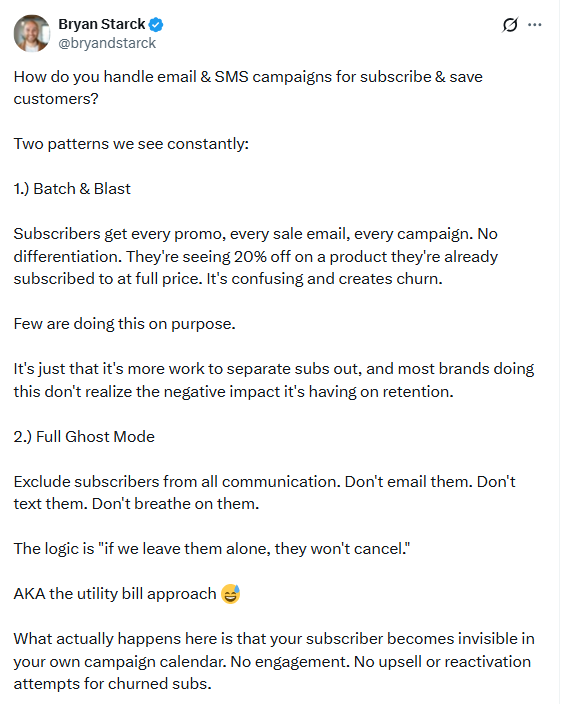
🐥 Tweet Worth Saving
Thanks for being part of the WAW team 💃 We’d love to know if this was helpful so we can continue playing it smart with the right strategies.