Is TikTok Shop Really For You?
📊 These four traits decide if your SKU survives, Google and Microsoft push ads toward AI-driven decision making, and more!

Hello! You've arrived at What Actually Works 🤓
We break down the real strategies, decisions, and plays that actually move the needle in your marketing, and here it for today.
📊The 4-Trait Filter That Decides If TikTok Shop Will Actually Scale Your Product
Most TikTok Shop post-mortems blame the algorithm, the creators, or the ad spend. The real failure usually happens before launch, at product selection.
Roughly 90% of purchases on the platform happen in-feed, which means buyers are not searching with intent. They are in an entertainment loop, and the product has to earn the interruption. Four traits decide whether a SKU can survive that loop long enough to scale.
Visual density. The question is not “is this a good product,” it is “can a 15-second clip communicate the differentiator without a voiceover?” Gel supplements in pouches pass because the form factor carries the narrative before a creator speaks. Pills in a bottle fail because the visual information per second is near zero. The diagnostic before committing:
- Shoot three unscripted phone clips of the product in normal use.
- Rewatch without sound. If nothing stops the scroll, the packaging is the problem.
- Fix the hero product or the format before any spend goes live.
Novelty as one unexpected variable. Novelty gets misread as a new category. It is not. It is one familiar category with one unexpected variable swapped in. Clear protein that drinks like juice and pancake-flavored protein are both whey isolate.
The base is identical to what fails. The variable is the tasting experience, and creators pick it up organically because it gives them something to react to. If the differentiator needs a paragraph to explain, it will not translate in-feed. One variable, one sentence, or cut it.
Price and brand equity compound; they do not substitute. A 20% discount on a known brand that the shopper cannot find cheaper elsewhere converts harder than a 40% discount on an unknown one, because the trust math is already done. The zones that actually work:
- Known brand, 15% to 25% off with exclusivity, converts on trust plus urgency.
- Unknown brand, 40%+ off, converts on pricing-error psychology.
- Unknown brand, 15% to 25% off, is the deadliest zone on the platform and almost always stalls.
Content repeatability is the ceiling filter. The first three traits decide if a product can launch. This one decides how far it can scale. Most products run out of fresh creative angles by week three, which is exactly when the algorithm needs new variants to keep CPA stable against an expanding audience. List 20 distinct content angles on paper before committing:
- Stop at 8 angles; it is a cash-flow play, cap spend accordingly.
- Stop at 14, it scales only with a deep creator bench producing concurrently.
- Hit 20 or more, the product has real runway worth pushing.
Category TAM, competitive density, and unit economics are secondary filters. These four are the primary ones, and they decide the outcome before a single video is filmed.
Partnership with AirOps
ChatGPT judges a page by its cover.
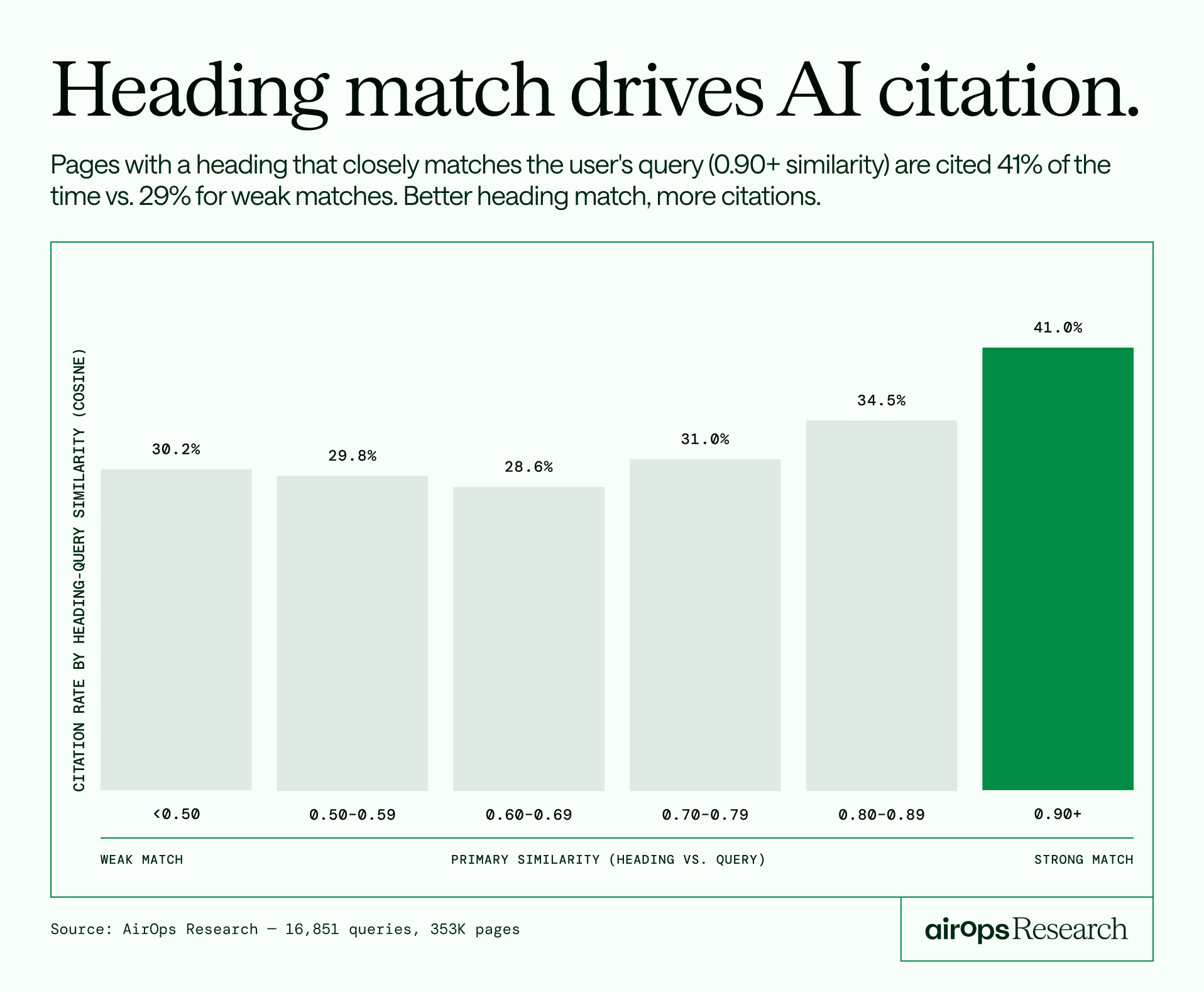
Pages with headlines that directly answer the query get cited 41% of the time. Loosely related headlines? 29%.
AirOps studied 16,851 ChatGPT queries and 353,799 pages across 10 industries to find what separates cited pages from ignored ones. A few findings that stood out to me:
- Retrieval rank is the top signal: A page at position 1 has a 58% chance of being cited. By position 10, that drops to 14%.
- Comprehensive guides don't always win: Pages covering 26-50% of ChatGPT's sub-queries get cited more often than pages covering 100%.
- Domain authority doesn't predict citation: Always-cited pages actually have lower DA than never-cited ones. Content quality is what counts.
The full report covers 20+ signals with controlled comparisons across each.
📊 Google and Microsoft Both Upgraded Their AI Ad Tools This Week
Google made its Ads Advisor smarter and more autonomous, while Microsoft launched a suite of tools to help brands stay visible in a world where AI agents are increasingly making purchasing decisions.
The Breakdown:
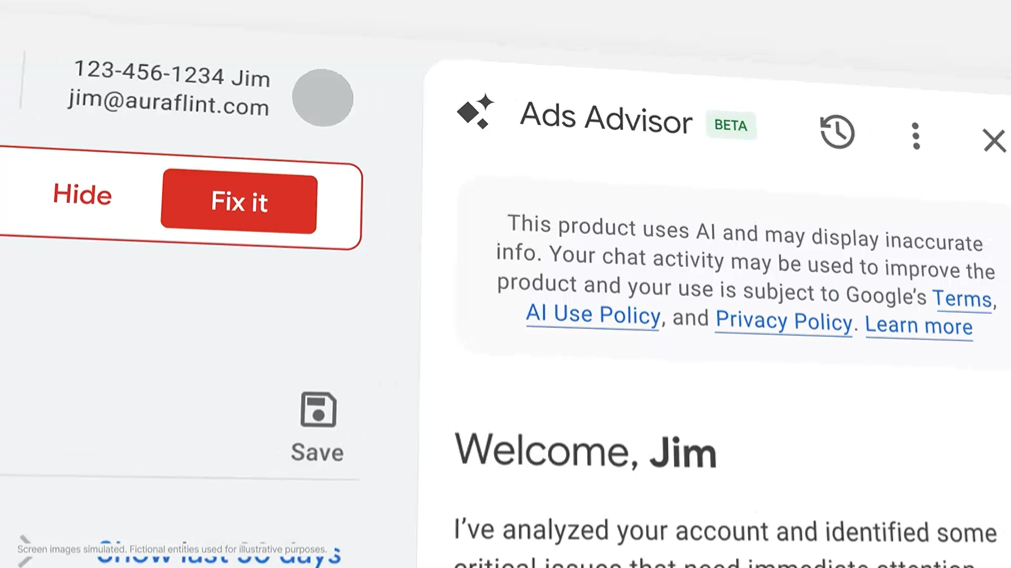
Google Ads Advisor Gets Proactive - Google updated Ads Advisor with Real-Time Policy Reviews that catch violations as campaigns are being built. It now proactively scans for fixes and in some cases resolves issues without waiting to be asked.
Security and Certifications Now Automated - Ads Advisor monitors accounts around the clock, flags dormant users and suspicious domains, and handles Google certifications automatically. What previously took weeks of paperwork now resolves in a single click with full change history maintained.
Microsoft Is Optimizing for AI Selection - Microsoft launched AI Max for Search, Offer Highlights, and AI Visibility this week. The shift is clear, stop optimizing for clicks and start making sure AI systems select your brand when making decisions for users.
Audiences and Commerce Got Smarter Too - A new audience tool builds targeting segments from plain language descriptions. Universal Commerce Protocol structures product data for AI agents to transact on directly. Copilot Checkout lets users complete purchases inside Microsoft Copilot.
Google's Ads Advisor will always ask for approval before acting and tracks a full change history so advertisers stay in control. On Microsoft's side, early data shows AI-driven traffic growing far faster than human traffic; the window to adapt early is now.
🐥 Tweet Worth Saving
Thanks for being part of the WAW team 💃 We’d love to know if this was helpful so we can continue playing it smart with the right strategies.